The Truth About Living in Boise Idaho No One Talks About
You are thinking about moving to Boise, Idaho. Online it looks perfect - safe, clean, surrounded by mountains and rivers. But there is a side of Boise life that does not show up in the Instagram photos or glossy relocation articles. I am talking about the farm smells that drift through the valley, traffic on a single overworked freeway, wild weather swings, bugs, and some real culture shock if you are coming from a big blue coastal city.
As someone who moved my family here from San Diego and now helps people relocate to the Treasure Valley full time, I want to walk you through the five big things most people do not hear about before they move. None of these are deal breakers for everyone, but they are real and you should know about them before you pack up and head to Idaho.
Table of Contents
- 1. Massive Growth and Traffic You Cannot Ignore
- 2. Culture Shock, Politics, and Gun Culture
- 3. Wild Weather and Four Real Seasons
- 4. Housing, Land, and Strange Zoning Mixes
- 5. Smells, Bugs, and the Less Pretty Side of Idaho
- Should You Still Move to Boise Idaho
1. Massive Growth and Traffic You Cannot Ignore
Boise has been on the relocation map for decades. The growth really picked up in the 1990s, then went into overdrive from 2020 through the COVID years. A huge wave of people came from California, Oregon, and Washington. Now I am seeing more and more people from Arizona, Texas, Florida, the Midwest, and Colorado who are looking for a more conservative, family focused place to land.
The city of Boise itself sits around 275,000 people and is not growing as fast as the suburbs. The real explosion is happening in:
- Meridian
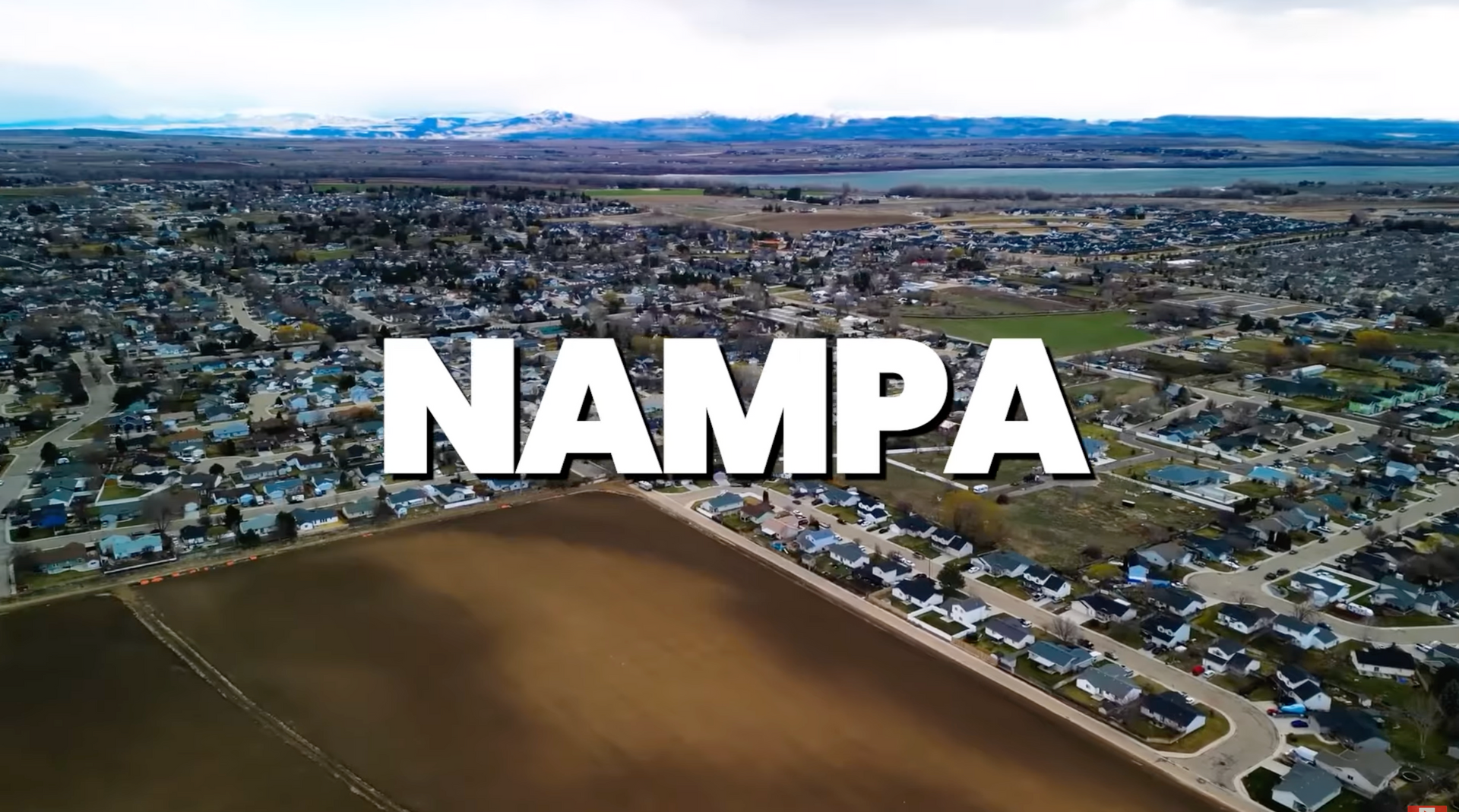
- Nampa
- Caldwell
- Star
- Middleton
- Kuna
Eagle, Idaho is still growing too, but at a higher price point. It is hard to get into Eagle for less than the high hundreds, and realistically many homes land closer to the million dollar mark.
For longtime Idahoans, this growth has been a shock. Quiet farm roads are now lined with subdivisions, and what used to be a 15 minute drive is now closer to 30 or 45 during rush hour. Many locals feel like Idaho is starting to feel “more like California” even though the culture is still very different.
One Freeway For the Whole Valley
Here is something almost no one talks about until they move here. The Treasure Valley really has one main freeway: Interstate 84. It runs east to west through the valley. Morning traffic heading from Nampa and Caldwell into Boise can back up a lot, and the afternoon commute out of Boise can be very slow too.
The valley was originally laid out on a smart grid system. Traffic used to flow well on two lane “country” roads. Now many of those roads have been widened to four lanes and loaded up with stoplights and turn lanes. Every mile or so you hit another light. Roundabouts are popping up in newer areas, especially around Nampa and Caldwell, which helps some, but there is still only one main freeway.
If you plan well, live near where you work and where your kids go to school, you can often keep your commute to 5 to 20 minutes. If you live on one side of the valley and drive across it every day, expect longer drive times and more frustration than you might think from “small town Idaho.”
2. Culture Shock, Politics, and Gun Culture
Culturally, Boise can feel very different depending on where you land. Boise itself leans more liberal. The suburbs and surrounding towns lean much more conservative. A lot of people move here specifically for the conservative values and family focused feeling they cannot find in their old city.
In simple terms:
- Boise city is more progressive. It votes more Democrat and has a mayor and city leadership that lean that direction.
- Meridian, Star, Kuna, Middleton, Nampa, and Caldwell are much more conservative overall.
Recent state data showed that roughly 75 percent of people moving to Idaho identified as Republican, about 10 percent Democrat, and the rest independent or unknown. So while locals worry about the state “turning blue,” most of the people I meet who are moving here are actually more conservative than the average Idahoan.
Gun Culture and Personal Freedom
Idaho is a constitutional carry state. That means any legal adult can carry a firearm openly or concealed without a permit in most everyday situations. There are still rules around schools, federal buildings, and mixing alcohol with firearms, but overall gun rights are broad here.
In daily life, you do not see open carry everywhere, but you will see it sometimes. Concealed carry is common. Hunting is a normal part of life for many families. If you are from a place where guns are heavily restricted, this can be a big culture shift at first.
For many people moving to Idaho, this level of freedom and self responsibility is a major reason they choose this state. For others, it takes some time to adjust. Either way, it is important to know what you are signing up for.
3. Wild Weather and Four Real Seasons
Boise delivers four real seasons and sometimes all of them in one day. There is a saying here that in the morning it can feel like winter, by late morning it feels like spring, early afternoon feels like fall, and the warmest point of the day feels like summer.
Summer Heat
Summers are hot and dry. There are years where we get several weeks over 100 degrees. I have personally seen days hit around 110 to 111. A “normal” summer will still have at least one to three weeks over 100 degrees, with lots of days in the 80s and 90s.
The good news is that the air is dry, not humid. That makes the heat more bearable than in sticky climates. There are also tons of ways to cool off:
- Playing or floating in the Boise River
- Heading to nearby lakes and reservoirs
- Spending the day at Roaring Springs water park(if you have kids, you will be there a lot)
The river is snow fed, so it often feels 10 to 15 degrees cooler near the water than it does in town.
Winter Cold and Inversions
Winters can be a shock if you are coming from coastal California. It can dip into the single digits at night, and rarely a little below zero. More commonly, you will see nighttime lows in the teens and daytime highs in the 30s.
Snow amounts vary a lot year to year. Some winters have several bigger storms. Others stay mostly mild with just a few light snows. The air stays pretty dry, which makes cold days feel a bit easier than damp coastal cold.
The thing that bothers most people is not the cold itself but the inversion layer. This is when a gray blanket of clouds and trapped air sits over the valley for days or even weeks. It feels dark, the air is still, and any pollution or farm smells tend to hang around. People can feel a bit down or stir crazy during long inversions.
My honest advice is to plan a winter trip somewhere sunny or warm each year if you can. A week of sunshine in the middle of winter can make the rest of the season feel much easier.
Spring and Fall
Spring and fall are where Boise really shines. Spring brings green fields, blooming trees, and the farms coming back to life. Fall brings cool crisp evenings and changing colors in the trees across the valley. Many people who move here end up saying that spring and fall are their favorite seasons by far.
4. Housing, Land, and Strange Zoning Mixes
One of the biggest shocks for people coming from out of state is how fast farm fields are being turned into subdivisions and how expensive land has become.
You can still find acreage - half acre, one acre, five acres and more - but you will usually have to go farther out and pay more than you think. Depending on location and whether utilities are already in place, land can range from about $50,000 per acre up to a couple hundred thousand per acre or more. Premium half acre lots on a pond or lake can sell for around $500,000 just for the dirt.
The typical subdivision lot in much of the valley is now around 6,000 to 10,000 square feet. If you buy a two story home, you can still get a decent backyard. But if you are dreaming of half an acre or an acre for a “couple hundred thousand” total including the house, that era is gone.
Realistically:
- A home on a half acre or full acre is often at least $600,000 and up, and that is usually for an older house that needs work.
- Newer or move in ready homes on larger lots are more likely in the $750,000 and up range.
Zoning Feels Random
Another thing that surprises a lot of people is how mixed the zoning feels. You can find:
- Luxury homes right next to farm fields
- Storage facilities right next to subdivisions
- High end subdivisions a short drive from very simple starter neighborhoods
This patchwork is part of Boise’s charm for some people and a frustration for others. It also means you need to pay attention to what is around your future home now and what might be built nearby in the future.
5. Smells, Bugs, and the Less Pretty Side of Idaho
If you love the idea of living near farms, you also have to love what comes with farms - or at least tolerate it.
Flies, Mosquitoes, and Ticks
The Treasure Valley has a real fly problem during certain months. It is worse near dairies, farms, chickens, and livestock, but almost everyone complains about flies at some point. In our house in Nampa, there have been days where I have killed 20 or 30 flies inside. It is not like a horror movie swarm, but it can be annoying.
The heaviest fly season usually runs from about July through October. Once the cold hits, they are gone. We manage it with fly zappers, screens, and those little fan devices restaurants use on tables.
Mosquitoes are present too, especially near ponds, canals, and slow moving water. The valley does aerial and ground spraying which helps keep them in check, but you will still want bug spray if you are outside in the evening.
Ticks show up mainly in the foothills and more rural areas. Lyme disease is rare here but not impossible. If you hike in tall grass or brush or have dogs that roam in the hills, it is smart to check for ticks after outdoor time.
Farm and Factory Smells
The other big thing no one talks about in relocation brochures is smell. Depending on where you live, you may smell:
- Dairy farms
- Cattle and livestock
- Manure and fertilizer being spread on fields
- The sugar beet factory in north Nampa
In many nice subdivisions, especially in more rural parts of Nampa, Caldwell, Kuna, and Middleton, you can be just a short distance from a dairy or a large farm. When the wind is right, you will smell it. Sometimes it is a light fertilizer smell that fades fast. Other times it can be strong and stay around for hours.
The sugar beet factory in north Nampa is famous for its smell. People describe it as cooked peanut butter or worse. At certain times of year, that smell can cover a big area around the main shopping district and even drift into western Meridian when the wind blows just right.
None of this is to scare you off. But it is important to check a neighborhood in person, step out of the car, and notice what you smell. I walk clients through which pockets tend to be more affected and which are usually out of range, but it will always depend on the wind and the season.
Should You Still Move to Boise Idaho
At this point, if you are still reading, Boise might actually be a good fit for you. Yes, there is growth. Yes, there are farm smells, bugs, and inversions. Yes, the culture is more conservative than many big cities, with a few blue pockets mixed in. But you also get real seasons, real space, friendly neighbors, and easy access to the mountains and rivers.
For my family, the trade was worth it. We left crowded freeways, high crime, and very high costs in Southern California. In Boise, we found safer neighborhoods, a slower pace, and a community where people still wave when you drive by and kids ride bikes in the street. We can be in the mountains in under an hour, and we built an entirely different future for our family than we could have in San Diego.
That does not mean Boise is right for everyone. If you hate winter, never want to smell a farm again, or want a dense big city nightlife, you may feel out of place here. If you want more space, lower overall costs than a coastal metro, and a community that leans more conservative and family focused, you may feel like you finally found home.
My name is Curtis Chism. I moved my own family from California to Idaho and now I help families like yours do the same every single week. My job is not to talk you into moving here. It is to help you figure out if the Treasure Valley really matches your budget, your lifestyle, and your values.
Whether you are 9 days, 90 days, or 2 years out from moving, we can build a plan that makes the transition as smooth as possible.
- Call or text me at (208) 510-0427
- Email me at info@chismteam.com
We will hop on a Zoom call, talk through your situation, and map out the right communities to explore so you do not end up in a spot that looks great online but does not feel like home in real life.