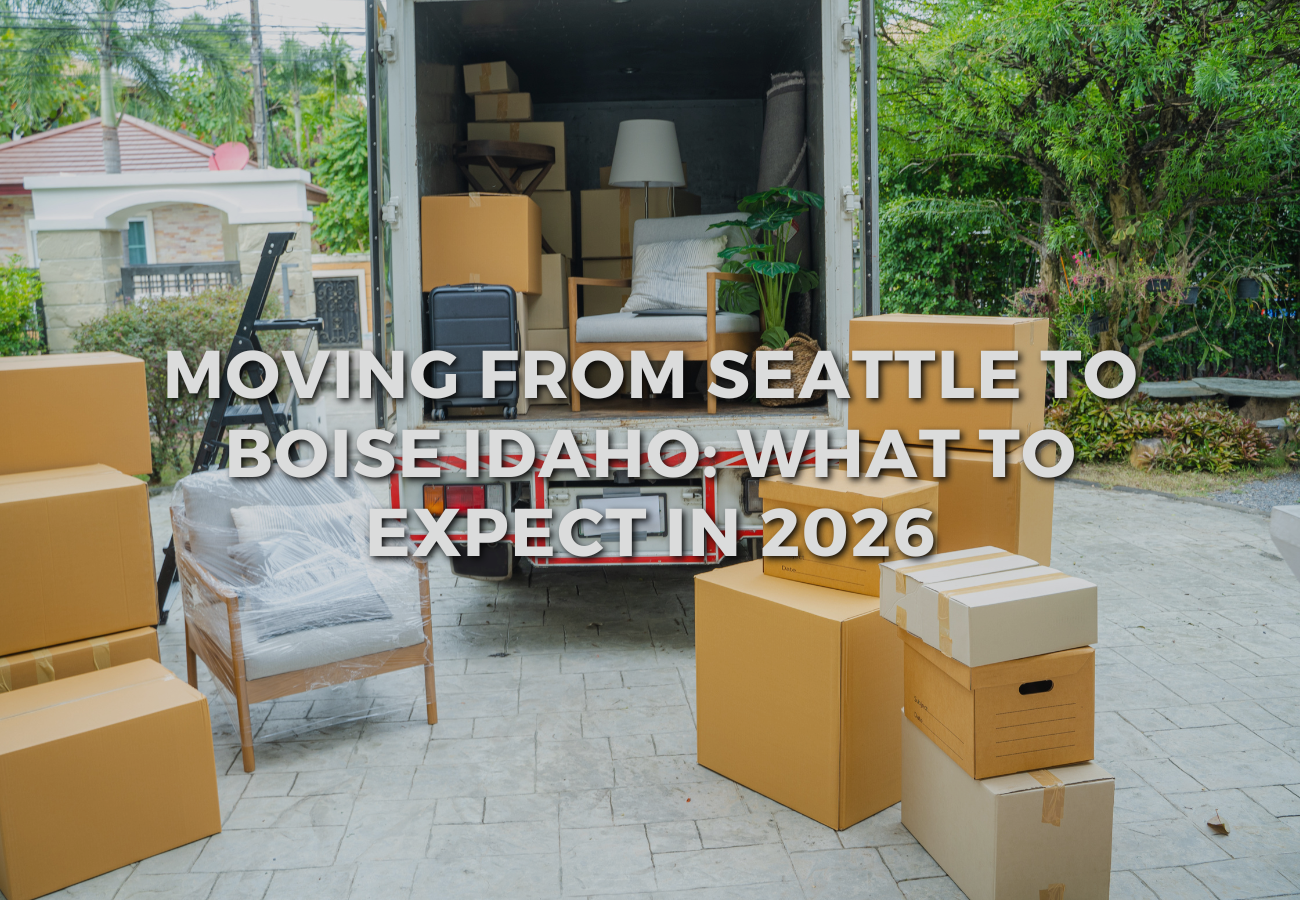
If you're sitting in Seattle traffic right now — burning 45 minutes on a commute that should take 15 — and your mortgage is north of $850,000 for a house that felt like a compromise, you're not alone. I hear from Seattle and Puget Sound–area buyers every single week who are done. Done with the cost. Done with the congestion. Done with watching their equity sit inside a house they barely get to enjoy. Moving from Seattle to Boise Idaho is one of the most financially significant decisions you can make, and it deserves a real, honest guide — not a highlight reel.
I'm Curtis Chism. I'm a licensed Idaho real estate agent with eXp Realty, consistently ranked in the top 100 agents in Boise for homes sold and top 250 nationally out of tens of thousands of eXp agents. I made my own relocation — from San Diego to the Treasure Valley — so I understand the calculus of leaving a West Coast life behind and starting fresh in Idaho. My practice is almost entirely relocation buyers, and a growing share of them come from the Seattle metro. Redfin's own migration data confirms what I see on the ground: Seattle is the number one out-of-state feeder market for Boise home searches.
The Seattle-to-Boise move is different from the California-to-Boise move in important ways. Washington has no state income tax. That changes the tax math considerably compared to California transplants. Seattle has a genuine urban culture — tech industry, coffee shops, waterfront, professional sports — and some of that you'll miss. Boise is not Seattle. I want to be direct about that. But what Boise offers in return is remarkable: lower housing costs, dramatically shorter commutes, a fast-growing outdoor and food scene, and a quality of life that many Seattle transplants tell me they didn't realize was possible until they got here.
This guide walks you through everything — the real numbers on housing costs, cost of living, taxes, commute, neighborhoods, schools, and lifestyle trade-offs. I'll also flag the things people don't expect. Read this, watch a few of my YouTube videos at Living in Boise Idaho, tour the area in person if you can, and then let's talk. Here's how I'd think about this move.
- Housing Costs: Seattle vs. Boise in 2026
- Full Cost of Living Comparison
- The Tax Situation: No State Income Tax vs. Idaho's Flat Rate
- Commute and Traffic: Night and Day
- Job Market and Remote Work
- Where in the Treasure Valley Should You Live?
- Schools: What Families Need to Know
- Lifestyle: What You'll Gain, What You'll Miss
- Weather: Trading Rain for Four Seasons
- New Construction and Housing Options
- How the Out-of-State Buying Process Works
- Who Thrives After Moving from Seattle to Boise?
- Frequently Asked Questions
Housing Costs: Seattle vs. Boise in 2026
This is usually the first number people want to see, and it's striking. In April 2026, the median home price in Seattle is approximately $825,000–$865,000 depending on the source and month. Single-family homes specifically are sitting near $975,000 at the King County median. Boise's median sale price, by contrast, is around $495,000 as of March 2026 — roughly 43–46% less for a comparable home. That gap is enormous. It represents hundreds of thousands of dollars in purchase price, dramatically lower mortgage payments, and a property tax bill that's a fraction of Seattle's.
Here's what that math looks like in practice. A $975,000 single-family home in the Seattle suburbs — after 20% down ($195,000), financed at current rates — carries a principal and interest payment somewhere around $4,900–$5,200 per month. A $495,000 home in Boise or Meridian at the same rate and the same 20% down is around $2,500–$2,700 per month in P&I. That's a difference of over $2,000 per month — before you factor in property taxes, which are lower in Idaho, and the homestead exemption Idaho offers. For many Seattle transplants, moving to the Treasure Valley means either dramatically lower housing costs at the same lifestyle level, or buying significantly more home for the same monthly spend. Often both.
| Metric | Seattle (King County) | Boise / Treasure Valley |
|---|---|---|
| Median Home Price (2026) | ~$850,000–$865,000 | ~$495,000 (Boise city) |
| Single-Family Median (County) | ~$975,000 | ~$550,000–$650,000 (Ada County) |
| Price Per Square Foot | ~$558 | ~$318 |
| Effective Property Tax Rate | ~1.01% | ~0.75% (with homestead exemption) |
| Days on Market | ~12–35 days | ~26 days |
| Market Competitiveness (Redfin) | 85/100 (Very Competitive) | Somewhat Competitive |
One thing worth noting: the Treasure Valley has its own price range depending on which city you target. Boise and Eagle sit at higher price points — typically $500,000–$700,000+ for single-family homes. Meridian offers the most inventory and tends to be the best value-to-quality ratio in the valley. Nampa, Caldwell, and Kuna offer meaningful affordability with Canyon County price points where medians are closer to $400,000. The key is matching the right community to your lifestyle — which I'll cover in detail below.
Full Cost of Living Comparison
Housing is the headline, but it's not the whole story. Multiple cost-of-living indices peg Seattle as 33–44% more expensive than Boise overall. Put another way: if you need $8,800 per month to maintain your standard of living in Seattle, you can replicate that lifestyle in Boise for around $6,000. That $2,800 monthly gap — nearly $34,000 per year — can fund retirement contributions, college savings, or simply let you work less. For remote workers maintaining Seattle-level salaries while living at Boise-level costs, the financial impact is life-changing.
Groceries in Boise run about 15–16% cheaper than Seattle. Transportation costs are substantially lower — Seattle commuters spent $1,252 per year in time lost to traffic alone in 2025, on top of higher gas prices, ferry costs, and tolls. Utilities in Boise are a mixed picture: electricity runs slightly higher on a per-kWh basis in some months, but Idaho Power rates are generally stable and predictable, and natural gas from Intermountain Gas stays low through winter. Healthcare costs are comparable to slightly lower in Boise. The one honest cost-of-living caveat: Idaho applies its 6% sales tax to groceries, unlike Washington's grocery exemption, so factor that in on weekly spending.
| Category | Seattle | Boise | Edge |
|---|---|---|---|
| Overall Cost of Living | 44% higher than Boise | Baseline | Boise |
| Groceries | ~16% higher | Grocery tax applies (6%) | Boise (net) |
| Transportation | ~63% higher | Car-dependent, lower congestion | Boise |
| Utilities | ~24% cheaper | Higher in summer (AC) | Seattle (slight edge) |
| Healthcare | ~6.5% more expensive | Growing provider network | Boise (slight edge) |
| Dining Out | ~23% more expensive | Growing restaurant scene | Boise |
| Childcare (annual) | ~$12,700 avg. | ~$7,200 avg. | Boise |
The Tax Situation: No State Income Tax vs. Idaho's Flat Rate
Here's the honest answer on taxes, because this is where Seattle transplants often have questions that California transplants don't: Washington has no state income tax. Idaho does. Idaho's individual income tax rate is a flat 5.3% as of 2025 (reduced from 5.695% as part of recent tax reform, per the Tax Foundation's 2026 State Tax Competitiveness Index, where Idaho ranks 9th nationally). So if you're moving from Seattle and currently pay zero state income tax, you will be adding an Idaho income tax obligation when you establish residency here. That's a real number you need to factor in.
That said, the full tax picture still favors Boise for most buyers. Washington's sales tax in Seattle is 10.1% — one of the highest combined rates in the country. Idaho's sales tax is 6%. Seattle's effective property tax rate runs around 1.01% on assessed value; Boise's effective rate is around 0.75%, further reduced by the homestead exemption. Washington also recently enacted a 9.9% capital gains tax, which the Tax Foundation flagged as a driver of Washington's declining tax competitiveness ranking. For people with investment income, that's worth evaluating closely with a CPA before you move. For most W-2 workers, the income tax introduction is partially or fully offset by the savings on sales tax, property tax, and overall cost of living.
Commute and Traffic: Night and Day
Seattle ranked 7th worst in the U.S. for traffic congestion in 2025 per the TomTom Traffic Index, with an average congestion level of 45% — meaning your trips take nearly one-and-a-half times longer than they should under free-flow conditions. The INRIX Global Traffic Scorecard ranked Seattle 10th in the nation for hours lost to congestion, with Seattle commuters losing 68 hours to traffic in 2025 — an 8% increase from the year before, and 19 hours above the national average. The typical Seattle driver lost $1,252 in time value from traffic alone. The region's total economic hit from congestion approached $2 billion.
Boise is not traffic-free — that's the honest answer. The valley has grown significantly and Chinden Boulevard, I-84, and the Meridian interchanges see real congestion during peak hours. But the scale is categorically different. Average Boise commutes run 15–20 minutes for most suburban-to-city routes. Even the Nampa-to-Boise corridor on a bad day is 35–40 minutes. There are no ferry waits, no SR-99 tunnels, no I-5 parking lots. And new infrastructure projects — including Highway 16 linking I-84 toward Emmett — are actively expanding capacity as the valley grows. For most Seattle transplants, the commute relief alone is described as life-changing within weeks of moving.
Job Market and Remote Work
The Treasure Valley job market is growing, but it's not Seattle. If you work in big tech — Amazon, Microsoft, Boeing's engineering divisions, Google's Seattle offices — your role likely doesn't exist in Boise in the same form or at the same compensation level. Salary.com's data shows Boise employers offer roughly 15–16% lower salaries than Seattle for comparable roles. That's a real gap. The right answer for many Seattle transplants is remote work: keep the Seattle or PNW-level salary and move your cost of living down 44%. That math is genuinely powerful and it's exactly what a growing share of my clients are doing.
That said, Boise's job market is legitimately expanding in healthcare (St. Luke's and Saint Alphonsus are major employers), technology (Micron Technology is headquartered here and is a major economic driver), construction and trades, financial services, and education. Idaho's business climate ranks among the most competitive in the country. Companies like Clearwater Paper, Lamb Weston, HP Inc.'s printer division, and dozens of growing Idaho-based businesses provide stable, skilled employment. If you're in healthcare, construction management, finance, or education — the market here is solid. If you're in advanced engineering or a niche tech role, secure remote work or an employer before you move.
Where in the Treasure Valley Should You Live?
This is the question I spend the most time on with Seattle buyers, because "Boise" is a general answer and the Treasure Valley is a specific decision. The cities here have distinct personalities, price points, and lifestyle fits. Here's how I'd frame it for someone coming from the Seattle area.
Boise — Urban Energy, Higher Prices
Boise itself is the most urban part of the valley. Downtown has a walkable core with great restaurants, breweries, the Boise River Greenbelt, Boise State University, and a growing arts scene. If you loved Seattle's urban energy and want to stay close to it in Idaho's version, Boise's north end, downtown, and Hyde Park neighborhoods will appeal to you. Homes here run $500,000 to $800,000+ for single-family. It's also the most politically progressive part of Idaho — if that matters to you, Boise feels most like the Pacific Northwest culturally.
Meridian — Best Value, Most Inventory
Meridian is the fastest-growing city in Idaho and consistently offers the best combination of inventory, price, schools, and access. Most of my relocation clients end up in Meridian or one of its surrounding areas. New construction is abundant here, master-planned communities are well-designed, and the suburban infrastructure — parks, retail, restaurants — has matured significantly. Typical price range: $450,000–$650,000 for a solid single-family home.
Eagle — Premium, River Lifestyle
Eagle is the upscale suburb of the valley. Large lots, upscale new construction, a charming downtown, access to the Boise River, and excellent schools. If you're coming from Bellevue or Kirkland and want that feel — newer, polished, premium — Eagle is the closest Treasure Valley equivalent. Budget $600,000–$900,000+ for the lifestyle you're picturing.
Star and Middleton — Space and Value
Star and Middleton offer more land, quieter streets, and a community feel that appeals to buyers who want acreage or a slower pace. Star in particular has grown quickly with quality new construction at more accessible price points than Eagle. If you're coming from a rural or semi-rural part of the Puget Sound region, these communities may feel like home immediately.
Nampa and Caldwell — Affordability and Canyon County
Nampa and Caldwell are in Canyon County, which means lower property taxes and more affordable home prices — medians in the $380,000–$430,000 range. These cities have seen significant investment and improvement. Nampa in particular is growing quickly. The trade-off is a longer drive to Boise's job centers and amenities, though both cities have their own commercial corridors. For buyers with strict budget parameters, these communities often unlock homeownership that isn't possible in Ada County.
Schools: What Families Need to Know
School quality is often the deciding factor for families relocating with children, and the Treasure Valley delivers well here. The West Ada School District, which covers most of Meridian, is the largest school district in Idaho and consistently earns strong ratings. Eagle's school system is highly regarded. Boise Independent School District has a mix of strong and average schools depending on neighborhood — do school-specific research rather than relying on district averages alone.
For families coming from Seattle's strong public school culture, the honest comparison is this: Treasure Valley schools are good to very good, particularly in suburban communities. They are not identical to Seattle's top-rated elementary schools or University District schools. Private school options exist in Boise (Ambrose, Bishop Kelly, The Village School). Charter school availability is solid. Class sizes have grown as the valley has grown. If you have specific learning needs — gifted programs, special education services, language immersion — research the specific school and district before you commit to a neighborhood. Idaho's per-pupil spending is lower than Washington's, which does show in resource levels at some schools.
Lifestyle: What You'll Gain, What You'll Miss
I want to be honest here because I think a lot of relocation content over-sells the destination. Moving from Seattle to Boise is a genuine trade-off, not a pure upgrade on every dimension.
What you'll gain: dramatically lower cost of living, more house for your money, shorter commutes, faster access to outdoor recreation (skiing at Bogus Basin is 30 minutes from downtown Boise, Sun Valley is 2.5 hours, whitewater is 45 minutes away), a genuine community feel in the suburbs, and a pace of life that many transplants describe as the thing they didn't know they were missing. Boise's restaurant scene has improved significantly — farm-to-table, craft beer, international food options are real and growing. The Boise Greenbelt is an exceptional recreational asset right through the city. Summers here are genuinely beautiful — warm, sunny, low humidity, perfect for being outside.
What you'll miss: Seattle's waterfront and Puget Sound. Ferry rides. The Pacific Ocean within two hours. Seattle's depth of cuisine and international diversity. Major league professional sports (Boise has Boise Hawks minor league baseball and Boise State athletics, but not the Seahawks or Mariners). The cultural institutions — major concert venues, the Seattle Art Museum, Pike Place Market at its scale. The natural landscape of the Cascades and Rainier. If you've built your social life and family network in Seattle, starting over relationally is real work. Don't underestimate that piece.
Weather: Trading Rain for Four Seasons
Seattle averages 149 rainy days per year and is famous for its gray, overcast winters. Boise's climate is categorically different. The Treasure Valley sits in a high desert basin and gets around 250 sunny days per year. Summers are warm and dry — July highs in the low-to-mid 90s, low humidity. This is a major quality-of-life upgrade for many Seattle transplants who felt chronically sun-deprived.
The honest caveat on Boise weather: winter inversions. From roughly late November through February, cold air can get trapped in the valley under a warm air layer, creating gray, foggy, still days that persist for weeks at a time. It's not Seattle rain — it's more of a gray stillness without the rain — but it surprises some transplants who expected sunny Idaho winters. Boise averages around 18–20 inches of snow per year, but most years it's intermittent rather than accumulating. The bigger consideration is the inversion. If possible, visit in January or February before you commit, so you know what you're signing up for. Summers and springs here are genuinely spectacular.
New Construction and Housing Options
One major advantage the Treasure Valley has over the Seattle market is the abundance of new construction. Seattle's constrained geography — water on multiple sides, steep terrain, urban growth boundaries — makes new construction expensive and rare at the single-family scale. The Treasure Valley has active development corridors across Meridian, Eagle, Star, Nampa, and Caldwell, with multiple national and regional builders operating simultaneously.
I hold a Master's in Construction Management from USC, and new construction is one of my specialties. This matters for buyers because new construction transactions are different from resale — the builder's contracts favor the builder, incentives can be negotiated but rarely are by buyers without representation, and construction quality varies significantly between builders. I've walked dozens of new construction homes with out-of-state buyers and helped them avoid costly assumptions about what's standard versus what's an upgrade. If new construction is on your list — and for many Seattle transplants it is, because comparable brand-new homes simply don't exist in Seattle at these price points — visit my new construction page and let's talk strategy before you walk into a model home alone.
How the Out-of-State Buying Process Works
I work with out-of-state buyers every week, and the process is more manageable than most people assume. Most of my Seattle clients buy remotely — they do virtual tours, I walk through properties on video, and we work through a methodical process of narrowing communities before a one or two-day visit to make an offer. Some buyers make offers sight-unseen on new construction, which is very workable when you have detailed floor plans, builder reputations, and community context. For resale, I strongly recommend seeing the home in person before committing, even if it means a quick flight down.
Idaho real estate contracts are buyer-friendly compared to some West Coast markets. Inspection contingencies are standard, financing contingencies are normal, and you generally have real due diligence rights. The process from accepted offer to close typically runs 30 days for a cash deal or 30–45 days with financing. You don't need to be in Idaho at closing — remote closings via notary or mobile notary are common. For a full walkthrough of the relocation process, visit my relocation page and download the guide. I can also connect you with local lenders, inspectors, and title companies who work with out-of-state buyers regularly.
Who Thrives After Moving from Seattle to Boise?
After helping hundreds of relocation buyers, I can tell you that the people who have the best experience moving from Seattle to Boise share a few common traits. They have done their homework — they've visited the valley, they understand the weather, they've thought about where they want to live and why. They aren't chasing cheap housing as the sole motivation. They have a plan for work — either remote employment, a new job secured in Idaho, or a business they're building. And they've thought realistically about the social and lifestyle adjustment of starting fresh in a new city.
The buyers who struggle tend to move impulsively, buy in the first neighborhood that feels affordable, and then realize they wanted something different — more urban, or more rural — than where they landed. Or they underestimated Idaho's winters or the social rebuild. My job is to help you avoid those mistakes by asking the right questions before we ever look at a house. I've written more about the realistic picture of relocating to the Treasure Valley in posts on what makes people regret the move and the biggest differences between West Coast living and Idaho — both worth reading before you decide. Also check out our in-depth Treasure Valley cost of living analysis for detailed local spending breakdowns.
Frequently Asked Questions
Is Boise Idaho cheaper than Seattle?
Yes — Boise is significantly cheaper than Seattle across nearly every major expense category. Overall cost of living in Boise is roughly 33–44% lower than Seattle, depending on the index used. Housing is the biggest driver: Seattle's median home price in 2026 is approximately $850,000–$865,000, while Boise's median is around $495,000. You'll also pay lower property taxes, lower sales tax (6% vs. Seattle's 10.1%), lower childcare costs, and spend less on transportation. The one addition for Washington residents moving to Idaho is that Idaho has a state income tax at a flat 5.3% — Washington does not — so factor that into your specific financial picture.
How far is Seattle from Boise Idaho?
Boise is approximately 500 miles from Seattle by road — roughly a 7.5 to 8-hour drive depending on route and conditions. Direct flights from Seattle-Tacoma International Airport (SEA) to Boise Airport (BOI) run about 1 hour and operate multiple times daily on Alaska Airlines and Southwest. Many of my Seattle-area clients fly down for a weekend visit, see the communities they're considering, and make their decision in person before returning home to finalize plans. It's a very manageable distance for scouting the area.
What is the job market like in Boise compared to Seattle?
Boise's job market is growing but smaller than Seattle's, particularly for advanced tech roles. Seattle has Amazon, Microsoft, Boeing, and a deep tech ecosystem that simply doesn't exist at the same scale in Boise. The Treasure Valley's strengths are healthcare, construction and trades, financial services, technology manufacturing (Micron Technology is headquartered here), education, and a growing small business sector. The most successful approach for many Seattle transplants is to negotiate remote work with their existing employer and bring a Seattle salary to a Boise cost of living — that combination is financially powerful. If you're dependent on a Seattle-specific employer or a niche tech role, secure remote work or a Boise-area job before you move.
Does Boise Idaho get a lot of rain like Seattle?
No — Boise's climate is dramatically different from Seattle's. Boise gets around 250 sunny days per year, compared to Seattle's famously gray and rainy climate with roughly 149 rainy days annually. Boise is a high desert city with dry, warm summers and cold winters. The honest caveat is Boise's winter inversions: from roughly late November through February, still cold air can get trapped in the valley, creating persistent gray foggy days. It's not rain, but it's not sunny either. If you're moving primarily to escape Seattle's gray skies, visit Boise in January before you commit so you understand what inversions look and feel like.
What are the best neighborhoods in Boise for Seattle transplants?
It depends on your priorities. Eagle and north Meridian tend to appeal most to buyers coming from Bellevue, Kirkland, or Redmond who want a polished suburban lifestyle with quality schools and newer homes. Boise's north end and downtown appeal to buyers coming from Capitol Hill or Fremont who want walkability and urban energy. Star and Middleton attract buyers from rural or semi-rural parts of the Puget Sound region who want more space and land. I work through this matching process during an initial consultation — knowing your current neighborhood and lifestyle tells me a lot about where you'll be happiest in the Treasure Valley.
How do Idaho property taxes compare to Washington property taxes?
Idaho's effective property tax rate is approximately 0.75% of assessed value for primary residences, further reduced by a $125,000 homestead exemption. Washington's effective property tax rate in Seattle runs approximately 1.01%. On a $500,000 home, Idaho homeowners pay roughly $2,813/year in property taxes (after exemption); Seattle homeowners on a comparable home would pay around $5,050. The difference is substantial, and it's one of the reasons many buyers who exit Seattle's market find that their overall monthly carrying costs in Idaho are dramatically lower even accounting for Idaho's income tax introduction.
Is Boise a good place to live for families moving from Seattle?
Boise and the broader Treasure Valley are very well-suited for families. The outdoor recreation access — skiing, hiking, river floats, camping — is exceptional and genuinely family-oriented. The West Ada School District (covering most of Meridian) and Eagle's schools are strong. Neighborhoods in Meridian, Eagle, and Star are designed with families in mind — cul-de-sacs, parks, pools, community events. Crime rates in Treasure Valley suburbs are low. The main adjustment for families from Seattle is the cultural shift: Idaho is more conservative than Washington overall, and while Boise itself leans more moderate, the suburbs and surrounding areas reflect Idaho's traditional values. For families who want that environment, it's a strong draw. For families coming from Seattle's progressive culture expecting the same social environment, it will feel different.
What should I know about buying a home in Boise from out of state?
Buying remotely is very doable in today's market, especially with virtual tour technology and an agent who regularly works with out-of-state buyers. For new construction, remote purchases are common and well-supported. For resale, I recommend at least one in-person visit before writing an offer on a specific home — photos and video show a lot but don't replace walking the property. Idaho contracts include standard inspection contingencies that give you real due diligence rights. Closings can happen remotely via notary. The key is having an agent who understands your situation, has already pre-vetted communities for your lifestyle and budget, and can walk properties on your behalf. That's exactly how I structure my relocation process — visit my relocation page for details.
Key Takeaways
- Seattle's median home price in 2026 is approximately $850,000–$865,000. Boise's is approximately $495,000 — roughly 43% lower, with price per square foot at $318 vs. Seattle's $558.
- Overall cost of living in Boise is 33–44% lower than Seattle. A household needing $8,800/month in Seattle can replicate that lifestyle in Boise for around $6,000.
- Idaho's income tax is a flat 5.3% — Washington has none. This is a real consideration, partially offset by Idaho's lower sales tax (6% vs. Seattle's 10.1%) and lower property taxes.
- Seattle ranked 7th worst in the U.S. for traffic congestion in 2025; commuters lost 68 hours to traffic — 19 more than the national average. Boise commutes average 15–20 minutes for most routes.
- Redfin data confirms Seattle is the #1 out-of-state feeder market for Boise home searches. Remote workers keeping Seattle salaries while adopting Boise costs see the most dramatic financial benefit.
- The Treasure Valley is a region with distinct communities: Meridian offers the best value and inventory, Eagle is premium, Star and Middleton offer more space, Nampa and Caldwell offer Canyon County affordability.
- New construction is abundant in the Treasure Valley — a major advantage over Seattle's constrained market. Builder contracts require buyer representation to negotiate effectively.
- Boise winters include inversions (gray, foggy, cold days from November–February) that surprise some transplants from rainy Seattle. Visit in winter before committing.

Curtis Chism
Licensed Idaho Real Estate Agent • eXp Realty • License #SP56593
I relocated my own family from San Diego to the Treasure Valley and now help relocation buyers — many of them from the Pacific Northwest — navigate this same move every week. Learn more about my background and approach at weknowtreasurevalley.com/about.
Ready to Talk Through the Seattle-to-Boise Move?
I work with out-of-state buyers every week and can help you map out communities, run the real numbers, and build a plan that fits your timeline and goals.
Get the Relocation Guide Call or Text: 208-510-0427