12 Things to Know Before Moving to Boise Idaho
Moving to Boise Idaho: 12 Things to Know Before You Relocate
If you’re thinking about relocating to the Boise area, you’re not alone. I help out-of-state buyers move to the Treasure Valley every week, and I made this move myself from San Diego.
Here’s the honest truth: most people choose a city based on what looks good on a map. Then they get here and realize the daily lifestyle doesn’t match what they pictured. That’s why I put together this guide based on the same conversations I have with relocation buyers over and over.
My goal for you: pick the right area the first time so you don’t spend your first year here driving across the valley, stuck in traffic, or feeling like you “missed” what you moved to Idaho for.
Table of contents
- 1) Start with your lifestyle (not a city name)
- 2) River, foothills, skiing: distance matters
- 3) Affordability is real, but it’s not the only lever
- 4) “Nice-to-have” amenities add up fast
- 5) Schools matter (even if you don’t have kids)
- 6) How the Treasure Valley suburbs feel day-to-day
- 7) Growth, construction, and traffic realities
- 8) Yard size vs walkability (what you give up)
- 9) Community doesn’t “just happen” after you move
- 10) Your stage of life changes what “best area” means
- 11) New construction vs resale: the real trade-offs
- 12) HOAs and CCRs: what actually impacts your daily life
- My personal relocation lesson (and what I’d do differently)
- FAQ
- Key takeaways
- Talk with me about your move
1) Start with your lifestyle (not a city name)
The fastest way to get overwhelmed is to start with, “Should I live in Boise or Meridian?”
Start with this instead: what do you want your weeks and weekends to look like?
- Do you want to be close to the river and the Greenbelt?
- Do you want foothills access for hiking and mountain biking?
- Do you care about skiing and getting to the mountains quickly?
- Do you want newer subdivisions and newer amenities?
- Or is affordability and space your top priority?
Once you answer those, the “right suburb” becomes a lot clearer.
2) River, foothills, skiing: distance matters
This is where a lot of relocation buyers unintentionally make a mistake. A 20–30 minute drive doesn’t sound like much on paper. But it changes how often you actually do the things you moved here for.
For example, if you love the river and you end up living in Nampa, you may be driving roughly 30 minutes just to get to the areas you’ll use most. That can turn “we go all the time” into “we go once in a while.”
Same idea with foothills access. If hiking, biking, and quick mountain trips are a big part of your plan, being closer can be worth real money because you’ll actually live the lifestyle.
Simple rule: if something is a core part of your week, don’t put it “across the valley.”
3) Affordability is real, but it’s not the only lever
Affordability matters. It’s often the deciding factor. But it shouldn’t be the only factor.
If you can stretch your budget to live closer to the foothills, the river, or the parts of town you’ll use weekly, that extra spend can pay you back in quality of life (and time).
On the flip side, if nature access is more “nice-to-have,” then living farther out in places like Caldwell or Nampa can make a lot of sense. You’ll typically get more home for the money and still be within driving distance of everything.
Mortgage note: if you’re comparing monthly payments (not just price), use my mortgage calculator and plug in real numbers like taxes, insurance, and HOA dues. It’s the fastest way to avoid payment surprises.
https://www.weknowtreasurevalley.com/mortgage-calculator
This is especially helpful when rates are shifting and your payment can change more than you expect.
4) “Nice-to-have” amenities add up fast
Here’s something people don’t realize until after they move: certain amenities cluster in certain parts of the valley.
Pickleball is a good example. Courts exist all over, but they tend to be more concentrated around newer development areas. In some parts of Boise, the pickleball vs tennis debate has even gotten heated because neighbors don’t want the noise.
Fitness and “resort-style” amenities can be similar. If your ideal week includes a specific gym vibe or facility, you’ll want to consider proximity before you choose where to live.
5) Schools matter (even if you don’t have kids)
This is one of the biggest misconceptions I see. Even if you don’t have kids, school district boundaries can matter because they impact resale demand.
Families relocate here constantly. Many of them will filter their search by school district first, then choose a house second. That affects:
- How quickly your home sells later
- How many buyers compete for your home
- How stable demand is in different areas
In the transcript, I mentioned West Ada as a commonly cited “top” district and that it generally points buyers toward Meridian, Eagle, and Star(and often parts of Kuna depending on exact boundaries).
If you’re open to charter options or you’re homeschooling, you may have more flexibility in where you live.
6) How the Treasure Valley suburbs feel day-to-day
People call me all the time saying, “I’ve watched all your videos and I’m still confused.” That’s normal. Each suburb has a different feel, and it’s not always obvious until you’ve driven them.
Boise
Boise is the core city, with the biggest mix of housing types and neighborhood vibes. You’ll see everything from older historic areas to infill construction to foothills communities.
- North End: older homes, character, shops, restaurants, and a very distinct neighborhood feel.
- Boise Bench: closer to the airport, lots of mid-century homes, and a different value profile than the North End.
- Infill areas: new homes built among older homes (which can create “value looks weird” moments on a block).
- Foothills-side communities: Dry Creek Ranch, Hidden Springs, and Harris Ranch are examples of places buyers look when they want foothills access.
Boise also tends to be the most “mixed” politically and culturally compared to some suburbs, which matters to certain relocation buyers depending on what they’re coming from and what they want.
Meridian
Meridian is one of the most popular landing spots for relocation buyers because it’s central. You can get to Boise, Eagle, and major shopping and services without being “way out there.”
Trade-off: Meridian is busier and more crowded in certain corridors (especially around Eagle Road and peak commute times).
Eagle
Eagle is often the premium suburb for buyers who want a higher-end feel and quick access to the river, foothills, and the “weekend Idaho” lifestyle. It’s also a popular choice for buyers who want to be closer to mountain drives.
Trade-off: prices are typically higher, and new construction can push into premium pricing quickly.
Star
Star has that small-town vibe a lot of out-of-state buyers are specifically moving to Idaho for. It’s growing fast and has beautiful newer communities.
Trade-off: infrastructure can lag growth, and commute patterns matter if you need to be in Boise or Meridian frequently.
Middleton
Middleton is smaller, feels more rural, and can be a great fit if you want a slower pace and more space. Acreage opportunities can be easier to find compared to the tighter suburbs.
Kuna
Kuna has grown rapidly and still offers a wide price range, from more affordable options to higher-end homes.
Local reality check: Kuna has more agriculture influence in the area, and yes, there are days where smells and wind are part of the conversation. Some buyers don’t care. Others care a lot. You want to know that before you commit.
Nampa and Caldwell
Nampa and Caldwell are often the value plays. You can typically get more home for the money and find larger lots or even acreage-style properties more easily.
I live in Nampa. My practical advice is this: like any city, there are pockets. The older cores tend to have more issues, and the newer subdivision areas tend to feel extremely safe and family-oriented.
7) Growth, construction, and traffic realities
The Treasure Valley has been booming for years. With that comes construction and infrastructure catch-up.
Some realities to plan for:
- Two-lane roads and stop-sign corridors can bottleneck quickly
- Roundabouts help, but they don’t solve everything
- Detours can add time (sometimes unexpectedly)
- Commute convenience changes drastically depending on where you live
This is another reason I tell people to start with lifestyle. If you choose an area that forces you to cross the valley constantly, you’ll feel traffic more than you need to.
8) Yard size vs walkability (what you give up)
This sounds small, but it affects your weekends more than you think.
If you want a bigger yard, gardening space, or more elbow room, you’ll usually head farther out or toward more rural pockets. If you want more walkability, you’ll generally sacrifice lot size and choose areas where homes are closer together and amenities are closer.
In the Boise area, true walkability is more limited than many out-of-state buyers expect. Some areas are very walkable. Many areas are still very drive-dependent.
9) Community doesn’t “just happen” after you move
This is a big one, and people don’t always talk about it. Moving states is exciting, but it can be isolating if you expect friendships to show up automatically.
You usually have to be intentional. In my life, community came through:
- Church connections
- Homeschool and hybrid program connections
- Shared hobbies and groups (sports, fitness, clubs, meetups)
If you move here and you want to feel “settled” quickly, plan your community-building the same way you plan your housing search.
10) Your stage of life changes what “best area” means
Where you want to live at 30 might be totally different than where you want to live at 40. Same thing at 50 vs 60.
One example is 55+ communities. They can be a great fit for lifestyle and meeting people quickly. But there’s a trade-off: the resale pool can be smaller, which can affect how fast you sell later.
Another example: some buyers want to be near downtown and “in the action” now, but shift toward suburbs later when schools and space become a priority.
11) New construction vs resale: the real trade-offs
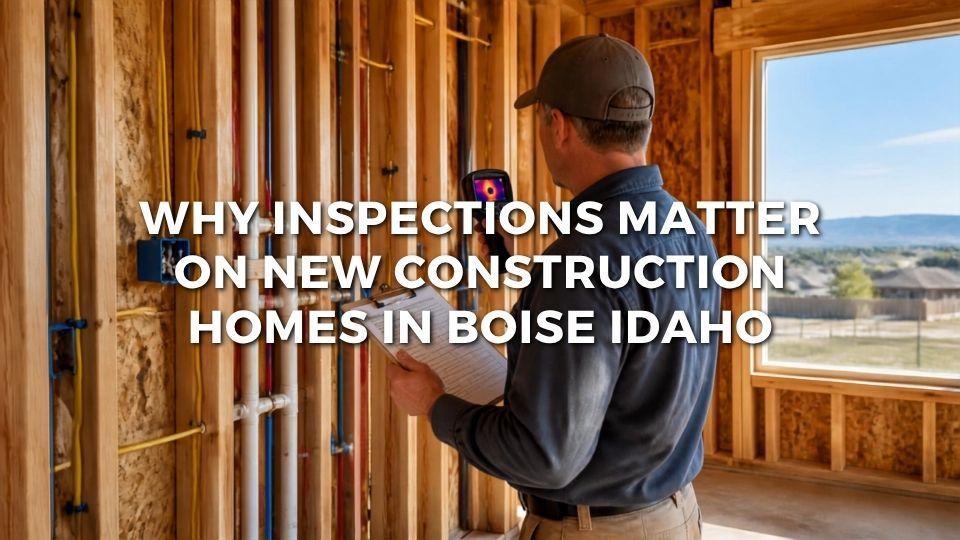
New construction is a big piece of the Treasure Valley market. It’s one reason the region keeps expanding outward. Many of my relocation clients choose it.
But it’s not automatically “better.” It’s just different.
Resale homes: more established neighborhoods, mature trees, and a “settled-in” feel. You may have more maintenance and older systems depending on the home’s age.
New construction: modern layouts, builder warranties, and typically lower near-term maintenance. But you won’t have mature landscaping, and the neighborhood feel is still forming.
Also, new construction neighborhoods often have a high percentage of other relocation buyers. That can be a positive if you want to build community with people who are also “new here.” Resale neighborhoods can feel more established, which can be great too, but you may have to work harder to plug in.
12) HOAs and CCRs: what actually impacts your daily life
HOAs are everywhere in the Treasure Valley. When buyers tell me, “I don’t want an HOA,” it’s usually for two reasons:
- They assume HOAs cost $300–$500 per month (common in some other states)
- They assume strict, high-control rules
In many local neighborhoods, HOA dues are often closer to annual amounts (which typically breaks down to a monthly equivalent that feels much smaller than what many out-of-state buyers expect). The rules also vary widely from neighborhood to neighborhood.
What are CCRs (and why they matter)?
CCRs are covenants, conditions, and restrictions recorded with the county. They can set rules beyond the HOA itself, and they don’t change easily. If you want “do whatever you want with your property,” you generally need to look at older areas, specific non-HOA pockets, or more rural properties.
Common HOA realities I see in the Treasure Valley
- Exterior paint colors and visible changes may require approval
- Sheds or structures above the fence line may need approval
- Some neighborhoods require a backyard plan submission, some don’t
- Trailer/RV parking rules vary a lot
- Enforcement “teeth” varies a lot (some HOAs are strict, some mostly send letters)
The key is to read the rules before you buy and match the neighborhood to how you actually live.
My personal relocation lesson (and what I’d do differently)
I want to share the key factor that drove my decision when I moved here, because it’s the same pressure a lot of relocation buyers feel: affordability.
I originally wanted to be in Meridian. I had friends there, and it felt like the obvious choice. But when I compared what I could afford, I saw a big difference. In Nampa, I could buy a larger home for substantially less than what a similar home would cost in Meridian.
For my family, space mattered. We needed enough bedrooms plus office space because both my wife and I work from home. The house we bought gave us the room we needed, and it worked financially.
Here’s the honest part: if I could have comfortably pushed my budget higher, I likely would have chosen differently, not because anything is “wrong” with Nampa, but because I moved to Idaho for nature access. I’m used to being close to outdoor life, and I do feel the extra drive time to the foothills and some of the places we use most.
The lesson: don’t let one factor (even a big one like affordability) make the entire decision for you. Balance budget with the lifestyle you’re moving here to live.
And one more thing: I take a long-term approach. I don’t love selling property. If I move again, I want it to be a move that supports the lifestyle we want long-term, not just a short-term shift.
FAQ
What is the best suburb to live in near Boise for relocation buyers?
There isn’t one “best” suburb. The best fit depends on your lifestyle priorities (nature access, schools, commute, budget, and community). If you tell me what you want your normal week to look like, I can narrow the shortlist quickly.
Is Meridian better than Boise for families?
It depends on what “better” means to you. Boise has the biggest mix of neighborhood types and the most established pockets. Meridian is very popular for families because it’s central, has lots of newer housing, and is close to major shopping and amenities.
Is Eagle worth the higher prices?
Eagle can be worth it if you value foothills and river access, a premium suburban feel, and being closer to quick mountain drives. If you won’t use that lifestyle often, you may be paying for benefits you won’t use.
Where can I get more house for the money in the Treasure Valley?
Buyers often look to Nampa and Caldwell when they want more space, larger homes, or acreage-style options at a lower price point than Eagle or some parts of Boise and Meridian.
Do I need to worry about HOAs in Idaho?
You need to understand the specific HOA and CCR rules for the neighborhood you’re buying in. Some are light-touch. Some are stricter. The practical day-to-day impact depends on how you live (trailers, sheds, RV parking, exterior changes, etc.).
How do I estimate my true monthly payment in Boise?
Don’t guess. Use real numbers for taxes, insurance, HOA dues, and your down payment. If you want to run scenarios, use my mortgage calculator here: https://www.weknowtreasurevalley.com/mortgage-calculator.
Key takeaways
- Pick your area based on your weekly lifestyle, not just what looks good on a map.
- Distance to the river and foothills changes how often you’ll actually use them.
- School districts can affect resale demand even if you don’t have kids.
- Each suburb has a different “feel,” and the trade-offs are real (crowding, price, infrastructure, pace).
- New construction vs resale is a lifestyle decision as much as a housing decision.
- HOAs and CCRs vary widely. You want clarity before you buy, not after.
Talk with me about your move
If you’re planning to buy a home in Boise and the Treasure Valley, I’m happy to help you build a clear plan so you choose the right area the first time. Most of my relocation clients start with a quick Zoom call where we map out lifestyle priorities, timeline, school preferences, and budget.
Email:
info@curtischism.com
Call or Text:
208-510-0427

Curtis Chism
Explore articles on Boise's best neighborhoods, tips for buying and selling in today’s market, new construction trends, and everything you need to know about living in Idaho.
Let us be your trusted resource as you navigate the exciting world of Boise real estate!
WATCH OUR LIVING IN BOISE IDAHO VIDEOS
Check out our YouTube videos for neighborhood tours, model home walkthroughs, and honest tips about relocating to Idaho.