Is the Treasure Valley Still a Good Place to Move in 2026?
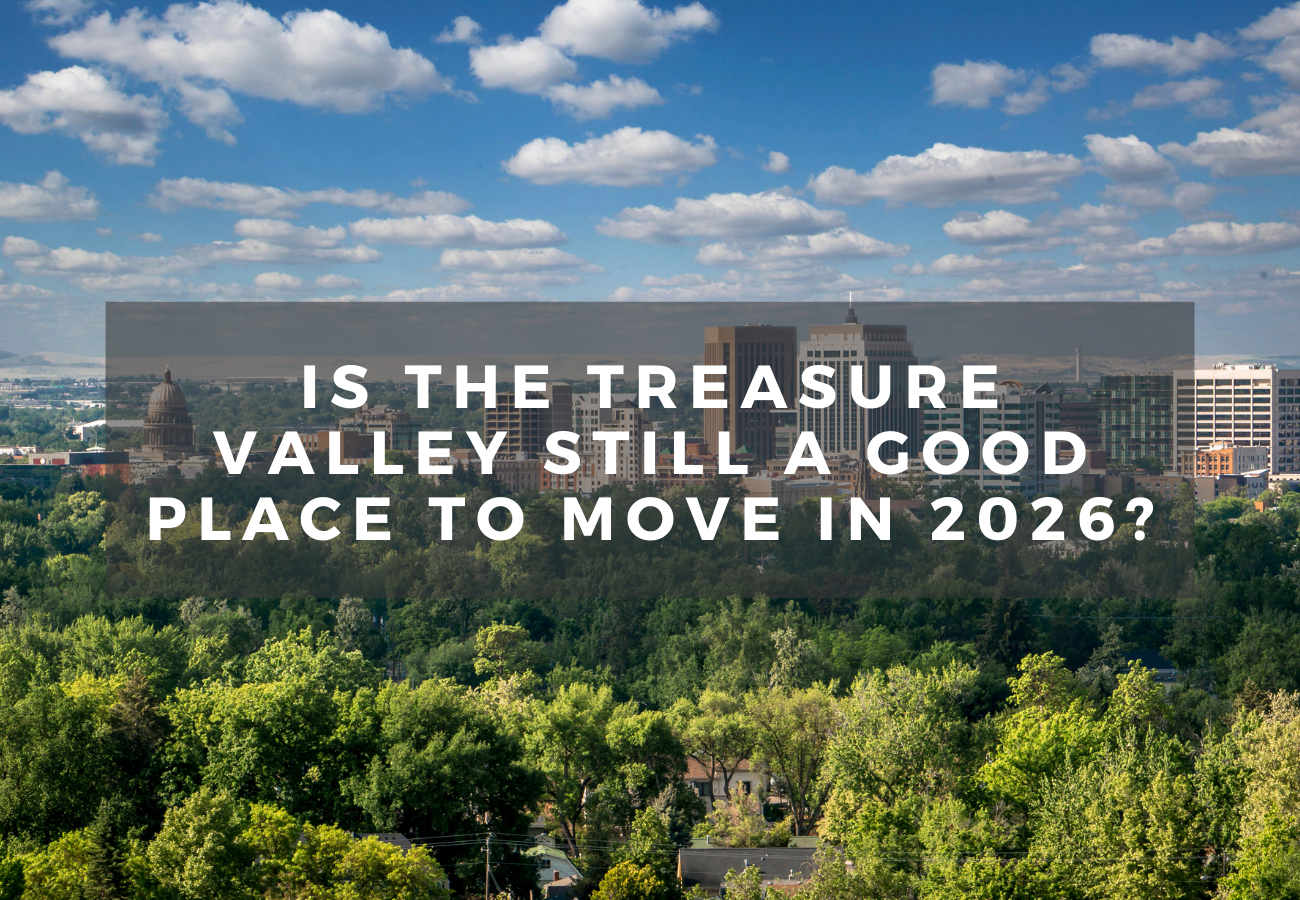
Is the Treasure Valley Still a Good Place to Move in 2026?
If you’re considering a move to Idaho, chances are the Treasure Valley is already on your radar. Boise and its surrounding cities have been talked about heavily for years, and a lot of people are wondering if the opportunity is still there or if the area has changed too much.
I work almost exclusively with out-of-state buyers relocating to the Boise area. I also live here, raised my family here, and bought property here myself. This article isn’t about hype or selling you on Idaho. It’s about giving you a clear picture of what moving to the Treasure Valley actually looks like now, who it still works well for, and where people tend to get it wrong.
Table of Contents
- The Big Picture: What Has Changed
- Population Growth and Development
- Jobs and Economic Stability
- Affordability and Cost of Living
- Lifestyle and Day-to-Day Living
- Comparing Treasure Valley Cities
- Common Relocation Mistakes
- Who the Treasure Valley Is a Great Fit For
- Frequently Asked Questions
- Key Takeaways
The Big Picture: What Has Changed
The Treasure Valley is not the same place it was a decade ago, and that’s important to acknowledge upfront. Growth has brought more traffic, higher home prices, and more development. At the same time, it has also brought better amenities, more job opportunities, and stronger infrastructure investment.
The biggest shift I see is that people need to be more intentional. You can’t just pick a random suburb, buy a house, and assume everything will work itself out. Buyers who are happiest here are the ones who understand how they’ll actually live day to day.
Population Growth and Development
The Treasure Valley continues to grow, but the growth is more stable and sustainable than it was during peak relocation years. Instead of fast-moving speculative buyers, most newcomers today are families, professionals, retirees, and remote workers who plan to stay long term.
New construction remains a large part of the housing supply, which helps prevent extreme shortages. Entire master-planned communities are still being built across the valley, especially in the suburbs.
Jobs and Economic Stability
One reason the Treasure Valley has held up well is economic diversity. Healthcare, manufacturing, technology, construction, and education all play a role in the local economy.
Large employers and long-term investments continue to support job growth. This has helped stabilize housing demand and avoid the boom-and-bust cycles seen in some other fast-growing regions.
Remote work has also played a major role. Many buyers moving here are bringing their jobs with them, which reduces reliance on any single local industry.
Affordability and Cost of Living
Affordability is relative, and this is where expectations matter.
Compared to major metro areas in California, Washington, Oregon, and Colorado, the Treasure Valley still feels affordable to many buyers. Property taxes are relatively low, utilities are manageable, and ongoing homeownership costs are typically lower than coastal markets.
However, prices have risen significantly compared to what longtime locals remember. Buyers coming from lower-cost regions may experience sticker shock.
The key is understanding trade-offs:
- Living closer to Boise and the foothills usually costs more
- Moving west or south often means lower prices but longer drives
- Newer homes typically come with HOAs but lower maintenance
Lifestyle and Day-to-Day Living
Lifestyle is still the primary reason people move here.
Most residents value access to nature, a slower pace of life, and communities that feel family-oriented. Outdoor recreation is a big part of daily life for many people, not just a weekend activity.
That said, the Treasure Valley is not a major food or nightlife destination. Dining options exist, but they are more limited and spread out. Entertainment tends to be more low-key and seasonal.
If your ideal lifestyle revolves around outdoor activities, community events, and less daily stress, this area still delivers. If you need constant urban stimulation, it may feel restrictive.
Comparing Treasure Valley Cities
Boise
Boise offers the most urban environment, older neighborhoods, and direct access to downtown, the Greenbelt, and foothills. Housing varies widely, from historic homes to infill and newer developments.
Meridian
Meridian is centrally located and extremely popular with relocation buyers. It offers newer housing, strong school options, and proximity to nearly everything, but it is also one of the busiest areas.
Eagle
Eagle tends to attract buyers looking for higher-end homes, quieter neighborhoods, and quick access to outdoor recreation. Prices are higher, but many buyers feel the lifestyle trade-off is worth it.
Star
Star has a small-town feel with rapid growth. It’s popular with buyers who want newer homes and proximity to foothills while still avoiding city density.
Kuna
Kuna continues to grow and remains more affordable. Buyers should understand commute patterns, wind, and agricultural surroundings before choosing this area.
Nampa and Caldwell
Nampa and Caldwell offer the most affordability and larger properties. These areas are ideal for buyers who want more space and don’t mind driving farther for work or recreation.
Common Relocation Mistakes
- Choosing based on price alone
- Underestimating commute times
- Assuming all suburbs feel the same
- Ignoring lifestyle priorities
Most regret I see comes from buyers who focused on one factor and ignored the rest.
Who the Treasure Valley Is a Great Fit For
The Treasure Valley continues to be a strong choice if you:
- Plan to stay long term
- Value outdoor access and space
- Want a slower, family-focused lifestyle
- Prefer newer homes or planned communities
Frequently Asked Questions
Is the Treasure Valley still growing?
Yes, but at a more sustainable pace focused on long-term residents.
Is it still safe to buy a home here?
For buyers with a long-term outlook, the fundamentals remain strong.
Is traffic getting worse?
Traffic has increased, especially in high-growth corridors, which makes location selection critical.
Key Takeaways
- The Treasure Valley is still a good place to move for the right buyer
- Lifestyle fit matters more than timing
- Each city offers a very different experience
- Intentional planning leads to better outcomes
If you’re thinking about buying a home in Boise or anywhere in the Treasure Valley, the smartest first step is mapping out your lifestyle priorities, budget comfort zone, and timeline.
Email:
info@curtischism.com
Call or Text:
208-510-0427
Tell me which transcript or topic you want converted next and I’ll build the next SEO-ready article.

Curtis Chism
Explore articles on Boise's best neighborhoods, tips for buying and selling in today’s market, new construction trends, and everything you need to know about living in Idaho.
Let us be your trusted resource as you navigate the exciting world of Boise real estate!
WATCH OUR LIVING IN BOISE IDAHO VIDEOS
Check out our YouTube videos for neighborhood tours, model home walkthroughs, and honest tips about relocating to Idaho.