How Traffic Patterns Affect Daily Life in Boise, Idaho
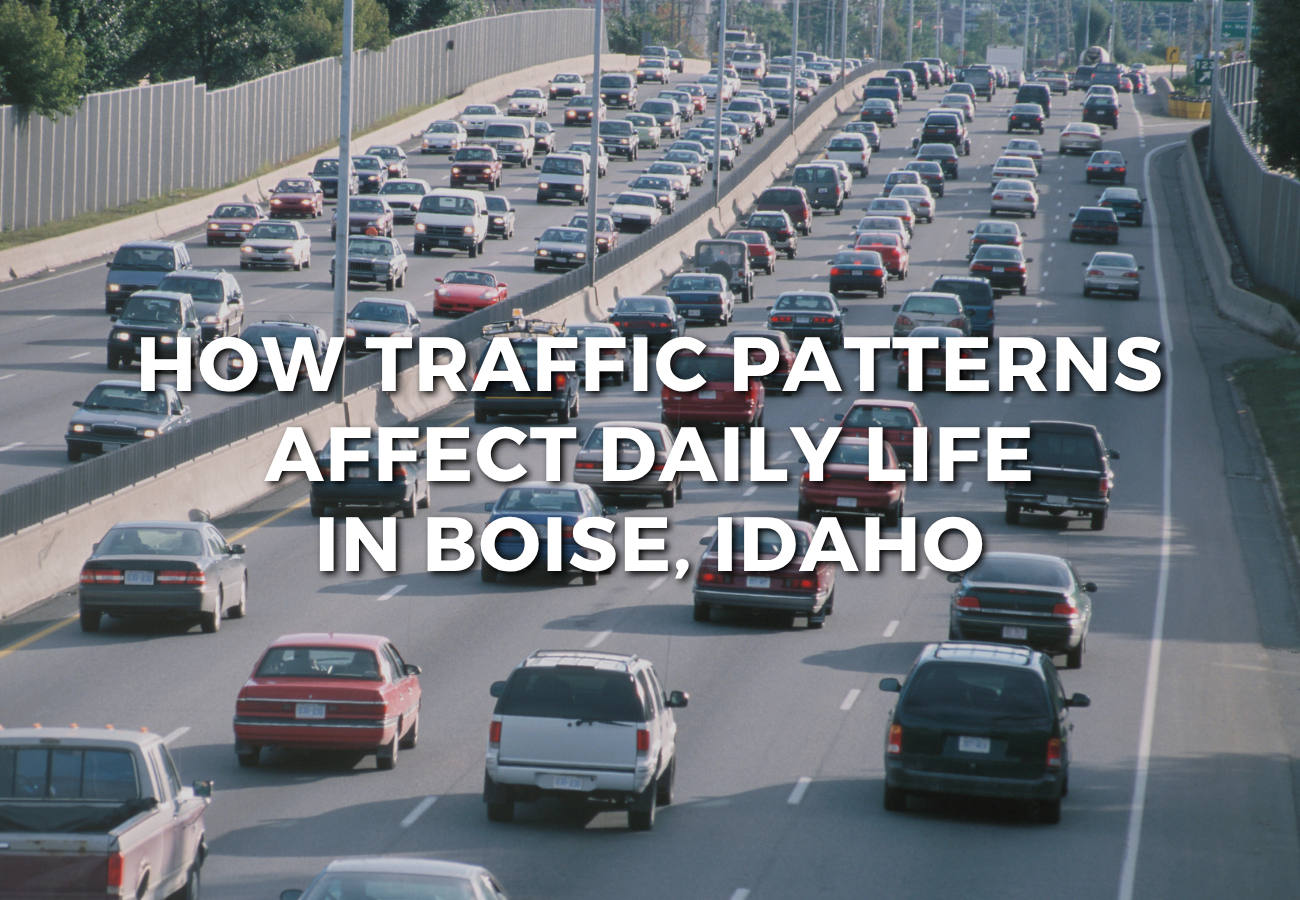
How Traffic Patterns Affect Daily Life in Boise and the Treasure Valley
If you’re planning a move to Boise or anywhere in the Treasure Valley, traffic is probably something you’ve thought about, but maybe not in the way you should.
Most people moving here are coming from places where traffic is significantly worse, so when they hear that Boise has “traffic,” they tend to dismiss it. And to be fair, compared to Southern California, Seattle, or other major metros, it’s not even close.
But here’s the part that catches relocation buyers off guard. Traffic in the Treasure Valley isn’t about how bad it is overall. It’s about where it happens, when it happens, and how that lines up with your daily routine.
Because in this market, traffic patterns can absolutely shape your day-to-day life depending on where you live. And I’ve seen this become one of the biggest factors in whether someone loves their location or ends up wanting to move again.
So in this breakdown, I’m going to walk you through how traffic actually works here, where the problem areas are, and how to think about it before you buy a home.
- Why Traffic Matters More Than You Think
- How Traffic Actually Works in the Treasure Valley
- The Most Common Traffic Bottlenecks
- How Traffic Affects Different Cities
- What This Feels Like Day-to-Day
- Common Buyer Mistakes Around Traffic
- How to Plan Around Traffic Before You Buy
- Frequently Asked Questions
- Key Takeaways
Why Traffic Matters More Than You Think
When you look at a map of the Treasure Valley, everything feels relatively close. Boise, Meridian, Eagle, Star, Nampa, Caldwell - they’re all connected, and distances don’t seem that far apart.
But what that map doesn’t show you is how traffic flows between those areas and how concentrated that flow becomes at certain times of day.
That’s what creates friction in your routine.
A drive that might take 20 minutes with no traffic can turn into 35 or 40 minutes during peak hours depending on the route. And when you’re doing that multiple times a week, it adds up quickly.
That’s why traffic isn’t just a minor inconvenience here. It’s something that can change how you feel about where you live over time.
How Traffic Actually Works in the Treasure Valley
The way traffic works here is different from larger cities where congestion is everywhere all the time. In Boise, traffic tends to concentrate along key east-west and north-south corridors during peak commute hours.
Most of the pressure comes from people commuting into Boise from surrounding cities in the morning and then heading back out in the afternoon.
So instead of thinking about traffic as a city-wide issue, it’s more accurate to think of it as a pattern that follows specific routes and timing.
If your daily routine lines up with those patterns, you’ll feel it. If it doesn’t, you may barely notice traffic at all.
The Most Common Traffic Bottlenecks
There are a few key corridors in the Treasure Valley where traffic tends to build consistently.
State Street, which connects Star, Eagle, and into Boise, is one of the most talked-about routes. During peak hours, this stretch can become congested, especially closer to the Boise side.
The I-84 corridor is another major route, particularly for commuters coming from Nampa and Caldwell heading toward Boise or Meridian.
Eagle Road in Meridian is also a known pressure point. It’s one of the main north-south routes in the valley, and because of how much commercial development is centered around it, it sees consistent traffic throughout the day, not just during commute hours.
These aren’t deal breakers. But they are important to understand because they affect how long it takes to get from one part of the valley to another.
How Traffic Affects Different Cities
Traffic impacts each city in the Treasure Valley a little differently, and this is where a lot of buyers start to feel the difference after they move.
In Boise, especially closer to downtown, you’re typically closer to where jobs, restaurants, and activities are located. That often means shorter commutes and less reliance on major corridors.
In Meridian, you’re centrally located, which can be a big advantage. But because it’s such a hub for shopping and services, you’ll also experience more consistent traffic, especially along main roads.
In Eagle and Star, the experience can vary a lot depending on your proximity to State Street and your commute direction. Some neighborhoods feel quiet and easy, while others require navigating more congestion depending on the time of day.
In Nampa and Caldwell, you may get more space and affordability, but if your routine pulls you toward Boise or Meridian regularly, you’ll likely be using I-84, and that’s where timing becomes critical.
And in places like Kuna or Middleton, you often trade convenience for quieter living, which means driving more for daily needs, even if traffic itself isn’t always the issue.
What This Feels Like Day-to-Day
This is where traffic goes from being a concept to something you actually feel.
If your home is aligned with your daily routine, traffic may barely register in your life. Your commute is simple, your errands are easy, and everything feels efficient.
But if your home is disconnected from where you spend your time, traffic becomes part of your daily experience.
You start noticing how long it takes to get to school, how often you’re sitting at lights, and how much time you’re spending driving back and forth across the valley.
That’s when it starts to impact your overall satisfaction with your location.
Common Buyer Mistakes Around Traffic
One of the biggest mistakes I see is buyers underestimating how often they’ll need to cross the valley. They assume they’ll stay local, but their routine ends up pulling them into other areas more frequently than expected.
Another mistake is only testing drive times outside of peak hours. A route that feels quick in the middle of the day can feel very different during a weekday morning or afternoon.
And probably the biggest mistake is focusing too much on the house and not enough on how the location fits into their daily life.
How to Plan Around Traffic Before You Buy
The best way to approach this is to map your life first, not the home.
Think about where you’ll be going during a typical week. Work, school, activities, errands, social time. Then look at how those locations connect to different parts of the valley.
If possible, test drive routes during actual commute times. That will give you a much clearer picture than anything you’ll see on a map.
And most importantly, choose a location that minimizes friction in your daily routine, not just one that looks good on paper.
Frequently Asked Questions
Is traffic bad in Boise Idaho?
Compared to major cities, no. But within the Treasure Valley, traffic can feel significant during peak commute times depending on your route.
What is the worst traffic area in the Treasure Valley?
State Street, Eagle Road, and parts of I-84 tend to see the most congestion, especially during rush hour.
Can I avoid traffic by choosing the right area?
Yes, in many cases you can significantly reduce your exposure to traffic by choosing a location that aligns with your daily routine.
Does traffic affect home values?
Indirectly, yes. Locations with easier access and less friction in daily routines tend to remain more desirable over time.
Key Takeaways
Traffic in the Treasure Valley is not about overall congestion, it’s about patterns. Where you live in relation to those patterns will shape your daily experience more than you might expect.
Choosing the right location can make your day feel smooth and efficient. Choosing the wrong one can add unnecessary time and stress to your routine.
Understanding how traffic flows before you buy is one of the simplest ways to make a better long-term decision.
Thinking About Buying a Home in Boise or the Treasure Valley?
If you’re planning a move to Boise Idaho or anywhere in the Treasure Valley, this is exactly the kind of detail that can make a huge difference in how much you enjoy your home long-term.
I help relocation buyers think through these decisions every day so you’re not just picking a home, you’re choosing the right location for how you actually live.
If you want help mapping that out, reach out anytime.
Email: info@curtischism.com
Call or Text: 208-510-0427

Curtis Chism
Explore articles on Boise's best neighborhoods, tips for buying and selling in today’s market, new construction trends, and everything you need to know about living in Idaho.
Let us be your trusted resource as you navigate the exciting world of Boise real estate!
WATCH OUR LIVING IN BOISE IDAHO VIDEOS
Check out our YouTube videos for neighborhood tours, model home walkthroughs, and honest tips about relocating to Idaho.