People ask me all the time: do you regret it? Four years in, my honest answer is that it's complicated — and I think that's actually the right answer. There are things about this move that completely exceeded what I expected. Things I never would have predicted. And then there's the stuff I got wrong. The choices I made that, looking back, I'd make differently. This post is my real four-year review of what it's like to leave California and build a life in Idaho. No highlight reel, no sales pitch. Just what it actually looks like from someone who's lived it.
I'm a third-generation San Diegan. My kids were born there and are fourth generation. My family has roots in San Diego going back to the 1800s. When I tell you leaving was one of the hardest decisions I've ever made, I mean that literally. San Diego has world-class weather, genuinely great food, the beach, and a lifestyle that a lot of people would kill for. I loved growing up there in the 80s and 90s. It was an incredible place to be a kid.
But by 2020, things had shifted in ways I couldn't ignore. And then I crossed through the South and Midwest on a road trip to visit my wife's sister — who had already left California — and something clicked. The rest of the country didn't look like California. People were just living their lives. And I realized we didn't have to stay where we were. We moved to Idaho not because it was on some list, but because it represented something we had stopped believing was possible: more space, more freedom, more house for the money, and a state that wasn't going to keep making our lives harder.
Four years later, I own three homes here and we've built multiple businesses. Here's what's true, what surprised me, and what I'd do differently.
- What the Weather Actually Did to Me
- The Adjustments Nobody Warned Me About
- The Thing I Least Expected: Community
- The Honest Financial Picture After Four Years
- What I Still Miss About California
- The Mistake I'd Fix If I Could Do It Over
- The Freedom Piece Was More Real Than I Expected
- The Four-Year Verdict
- Frequently Asked Questions
What the Weather Actually Did to Me
I know everyone says this, but coming from San Diego where it's 70 and sunny essentially all the time, I was not prepared for what Idaho winter actually feels like. The cold itself wasn't the worst part. The worst part was the inversion.
If you haven't heard of this, the Treasure Valley sits in a basin. During winter, cold air gets trapped in the valley and just sits there — sometimes for days, sometimes for two weeks or more. No sun. Gray sky. A heavier quality to the air from pollution and farm smells that settle into the basin with the clouds. My first inversion lasted about two weeks, and I'm not going to sugarcoat it — by day ten I was genuinely questioning the decision. Not in a dramatic way. In the quiet way where you wake up and look out the window and the same flat gray is there again and you don't say anything about it.
Four years in, I know how to manage it. Last winter we planned a trip to Hawaii right in the middle of the worst stretch. Came back to sunshine. Best call I made all year. But that first year I didn't have that playbook yet, and nobody had thought to tell me I'd need one. If you're moving from Southern California or Arizona, budget for a trip somewhere warm in January. It's not optional. It's maintenance.
The wildfire smoke is the other weather factor worth naming directly. The Treasure Valley doesn't typically see active fires, but smoke from fires in the surrounding mountains — and from Oregon and California — funnels into the basin and settles. The sky turns orange. Air quality drops. It can last for days or longer in a bad fire year. I've watched people move here specifically for the outdoor lifestyle and then spend August and September inside because of the air. Know it's part of the package.
Here's where I land after four years: I actually love having four seasons now. Fall in Idaho is stunning — genuinely one of the most beautiful things I've seen. Spring is real and green and welcome in a way it never was when I lived somewhere that barely changed season to season. Summer is incredible. The outdoor access between Memorial Day and Labor Day is everything people say it is. And now that I have the winter playbook, even that season is manageable. But that first year? I'd have benefited from someone telling me exactly what was coming.
The Adjustments Nobody Warned Me About
Beyond the weather, two things caught me off guard in the early months. The first was how spread out everything is. Coming from a dense California urban environment, you get used to having what you need within five minutes. Here, depending on where you live, it might be a 10 or 20-minute drive just to grab groceries. That takes adjustment — not a dramatic one, but a real one. You start thinking ahead differently. You batch errands. You don't just pop out.
The second was driving in snow and ice. I remember my first winter crossing a bridge on Highway 16 at night and my truck started sliding — just like those signs say, bridge ices first. I grew up off-roading in the California desert my whole life, and that background actually helped more than I expected. The physics of driving on ice has real overlap with driving in sand: don't overcorrect, take your foot off the gas, let the vehicle settle. I kicked it into four-wheel drive, the tires grabbed, and I coasted over the bridge fine. But I want to be direct with you: if you're moving here from California, get a truck or an AWD vehicle. People will tell you it's not necessary. I've watched clients get stuck in their subdivisions with two-wheel drive because subdivision roads often don't get cleared until a storm is well past. Ada County — Boise, Meridian, Eagle, Star — pre-treats roads with ice melt and clears them well. Canyon County — Nampa, Caldwell, Middleton — doesn't pre-treat, so you need to be more careful out there.
The Thing I Least Expected: Community
This is the one I didn't see coming, and four years later it might be the thing I'm most grateful for.
I assumed moving to Idaho from California meant walking into a place where people like me weren't exactly welcome. You've seen the bumper stickers. Don't California My Idaho. And yes, that sentiment exists in some corners of Idaho. But my personal experience over four years — not once has someone been hostile to me about where I came from. Not once. The people who've been here for generations have been mostly welcoming, genuinely kind, and willing to show a newcomer around. The friction I've seen has almost always come from other transplants who made the same move a year before me and then pulled the ladder up behind them.
What actually surprised me was how genuinely friendly people here are — and I don't mean politely friendly. Not the California version where a cashier says have a great day and immediately looks past you. I mean neighbors who actually show up. People who wave when you drive by. Cashiers who ask how your day is and wait for the answer. When a client came to tour homes during a massive snowstorm and ended up stuck, neighbors came out spontaneously to help push his truck out. That kind of thing.
That intentionality is actually one of the unexpected gifts of starting over. When you don't inherit a social life from where you grew up or where you went to school, the community you build reflects who you actually are now and what you actually value. That's harder. It's also better.
The Honest Financial Picture After Four Years
In California, we were renting and the idea of owning a home felt like a fantasy. Four years later, we own three homes in Idaho and have built multiple businesses — real estate, construction consulting, and an outdoor living construction company. That's not a humble brag. It's the most concrete proof I can give you of what this move makes possible when you approach it right.
Here's the day-to-day financial picture, not the headline comparisons but the actual stuff that catches people off guard. California's Q1 2026 statewide median home price was $843,390. Ada County, Idaho landed at $540,945 in March 2026. That gap — and what it means for your monthly payment — is where the financial story starts. But it doesn't end there.
| Category | My Actual Idaho Cost | Notes |
|---|---|---|
| Combined gas + electric | $100–$250/month | Includes hot tub, sauna, two deep freezers. Avista actually sent a 20% rate reduction notice — unthinkable in California |
| Pressurized lawn irrigation | $186/year (up from $135 four years ago) | Unlimited non-potable canal water. Compare to $400/month domestic water irrigation in some Boise neighborhoods |
| Homeowners insurance | $600 year one → $1,000 now (40% rise over 4 years) | New home in Star quoted $2,100 initially — shopped down to $1,050. Always get multiple quotes |
| Gas (vehicle) | ~$4.46/gallon (AAA, May 2026) | Idaho gas tax 33¢/gal vs. California's 61.2¢/gal — California pump prices running $6+ |
| Property tax (Ada County) | 0.4–0.8% effective rate | Plus $125,000 homeowner's exemption off assessed value on primary residence |
| State income tax | 5.3% flat | Down from 5.8%. California runs 8–13.3% depending on income bracket |
| Vehicle registration | $75/year per vehicle | No smog checks. Was paying ~$800 in California for the same truck |
Groceries are the honest caveat: Idaho charges 6% sales tax on all groceries statewide. California doesn't tax groceries at all. That stings at checkout until you find the alternatives that California suburban life simply didn't offer me. I now buy beef directly from a local rancher — a friend of mine whose cows I've watched graze. Non-GMO, grain-finished, half a cow at a time, about $10–$12 per pound across all cuts with full selection of what I want. Raw milk delivered to my door for $8 a gallon. Farm eggs from roadside honor-system stands for $5 a dozen. That's not a lifestyle upgrade I could have accessed in a San Diego suburb, and it offsets the grocery tax more than people expect. For the full line-by-line breakdown, the Treasure Valley cost of living analysis and the California vs. Idaho cost comparison go deep on every category.
What I Still Miss About California
I'd be lying if I didn't name this clearly, because I think relocation content that skips the honest loss does people a real disservice.
The food. California has some of the best food in the world — genuine, authentic Mexican food, incredible sushi, the variety of a truly international city. Idaho's restaurant scene has improved significantly over the four years I've been here and keeps getting better. But it is not San Diego's food scene and it probably never will be. That's a real thing I miss on a regular basis.
The weather in January. I'd be lying if I said I don't occasionally think about San Diego's 70-degree days in the middle of a gray Treasure Valley inversion. Four years in, I actually love having seasons — fall here is stunning, spring is genuinely beautiful, summer is incredible. But February during a bad inversion? Part of me still misses the Pacific.
Family proximity. This is the hardest one, and it deserves to be said plainly. We still have family in San Diego. Getting back takes flights, coordinated schedules, real effort. That distance is a genuine cost that doesn't show up on any financial spreadsheet, and you have to go into this knowing that maintaining those relationships requires intentionality in a way it didn't when you lived 20 minutes away. It's manageable. It's real. Budget for it emotionally and financially.
And the ocean. There's something about being able to drive to the beach whenever you want that I genuinely miss. Idaho trades that for mountains, rivers, and some of the best outdoor access in the country. For me and my family, that trade works. But it is a trade, and I'd rather you go in knowing that than discover it six months after you've moved.
The Mistake I'd Fix If I Could Do It Over
This is the part I want you to pay the most attention to, because it's the number one mistake I see clients make — and it's almost always avoidable with the right guidance before you buy.
When we first moved to Idaho, I prioritized affordability and availability. That made sense at the time. But over four years, our priorities shifted in ways I didn't anticipate. The things that matter most to us now — the friends we've made, the school situation for our kids, our homeschool co-op that's centered in the Meridian area — none of those factors were on my radar when I bought my first house. The result: our family's drive to the activities we actually care about most is about 35 minutes each way. Our friends have mostly ended up in a different part of the valley. We're now buying a new house in Star specifically to get closer to where we actually want to be. And I'm a real estate agent — I know exactly what this kind of correction costs. Moving twice is expensive.
My advice for every person I work with: think not just about where you want to live, but where you're going to actually spend your time. Where are your kids going to school? If you're homeschooling, where are the co-ops? If the river is non-negotiable for your lifestyle, are you close enough to go on a Tuesday evening — not just on planned weekend trips? If you love pickleball, are you near the courts? If church community is central to your life, are you buying near your church or a 40-minute drive from it? These questions sound granular, but they determine your actual daily quality of life in a way that the general neighborhood decision doesn't capture. This is exactly what I work through with clients before we start touring homes. See the breakdown of how different parts of the Valley actually live in the urban vs. suburban comparison.
The Freedom Piece Was More Real Than I Expected
I expected to feel financially better. I didn't fully anticipate how different the day-to-day experience of living in a state that leaves you alone would feel.
Constitutional carry. No vehicle inspections, no smog checks. An income tax that went down, not up. School choice that is genuinely remarkable — the parental choice tax credit passed in 2024 gives up to $5,000 per child per year for qualifying private or hybrid homeschool programs. The 4th of July in Star legitimately sounds like a war zone because the entire neighborhood is out lighting off fireworks and loving every second of it. My daughter marches in the parade with American Heritage Girls. Caldwell's Indian Creek Plaza puts on 260 community events a year — rodeos, concerts, holiday markets. You go to the Snake River Stampede and they open it with prayer, everyone stands, nobody flinches.
I know some of that sounds like small stuff. It doesn't feel small when you've come from a state that was constantly adding friction to how you live. There's a mental energy you get back when you stop bracing for the next policy, the next mandate, the next thing making your life harder. I didn't fully appreciate how much of my bandwidth was going to that until it stopped. It shows up in how you sleep at night. It shows up in how you show up for your family. I wrote about this in depth in the pros and cons post — the freedom piece is one of the most consistent things clients tell me they underestimated before they moved.
The Four-Year Verdict
Yes. Without hesitation.
My cost of living is dramatically lower. I own three homes — one primary, two rentals — and we owned none of that in California. My kids are growing up with space, safety, and a community that shares our values. The freedom piece turned out to be even more real than I expected. The businesses I've built here — real estate, construction consulting, outdoor living construction — none of that was on my radar when we moved, and all of it grew from the stability and opportunity this state made possible.
Could I go back? I don't think about it that way anymore. This is home. The move is worth it. Idaho is worth it. But you want to go in with eyes open — the real version, not the highlight reel. The inversion is real. The food gap is real. The family distance is real. The mistake of buying in the wrong part of the valley for your actual life is absolutely real and absolutely avoidable. The people who thrive here are the ones who did the work before they moved, not after. That's why I help people through this process the way I do — because I've been exactly where you are, made the mistakes, and know what would have saved me time and money on the front end.
For more on the specific decisions involved in this move, the pros and cons of moving to Boise post covers the full picture, and the Nampa to Star strategy post explains exactly how I'm thinking about the move I'm making now. The relocation guide is where to start if you're ready to map out your own move.
Frequently Asked Questions
Is moving from California to Idaho worth it?
For most California households making the move intentionally and with accurate expectations, yes — it is worth it. The financial case is real: Ada County's median home price was $540,945 in March 2026 vs. California's statewide median of $843,390. Property taxes, vehicle registration, gas prices, and utilities are all materially lower. The freedom and community benefits are genuine. The honest costs are also real: Idaho winters require adjustment, the food scene doesn't match California's depth, family distance requires intentional maintenance, and buying in the wrong part of the valley for your actual lifestyle is an expensive mistake. People who research before they move consistently land better than those who figure it out after.
What is the biggest mistake people make moving to Boise Idaho?
Buying in the wrong part of the valley for the life they actually end up living — and it's almost always avoidable with better pre-move planning. Most relocators research cities and neighborhoods at a general level but don't think through where they'll actually spend their time: which schools or co-ops their kids will attend, where their church community is, how close they'll need to be to specific recreational access. In Idaho's suburban geography, 30 minutes is the difference between doing something regularly or almost never doing it. Making that correction after the fact means moving twice, which is expensive.
What is the winter inversion in Boise Idaho?
The winter inversion is a recurring weather pattern where cold air gets trapped in the Treasure Valley basin and sits for days or weeks at a time — blocking sunlight, flattening the sky to a uniform gray, and creating still, heavy air. It typically hits hardest in December and January. It doesn't happen every year with the same intensity, but when it does, it can be a genuine mood challenge for people moving from consistently sunny climates like Southern California. The practical solution most experienced transplants adopt: plan a trip somewhere warm right in the middle of the worst stretch. Don't try to tough it out your first winter.
Do Californians get a hostile reception in Idaho?
The "Don't California My Idaho" sentiment is real in some corners of the state, but the lived experience for most transplants is significantly warmer than that framing suggests. The people who have been in Idaho for generations have been, in my personal experience over four years, mostly welcoming and genuinely kind. The hostility I've seen has almost always come from other recent transplants who made the same move themselves. The data also supports this: studies show approximately 75–78% of voters moving from California to Idaho register as Republicans — people moving to embrace Idaho's values, not change them. Locals can generally tell the difference.
How much did it cost financially to move from California to Idaho?
The financial picture has two sides. The upfront cost of moving — professional movers for a California to Idaho move typically runs $8,000 to $14,000 depending on household size. The ongoing savings vary significantly by household but commonly reach $10,000 to $30,000 per year when you add up lower mortgage costs, lower property taxes, lower vehicle registration ($75/year vs. $300–$800+ in California), lower homeowners insurance, lower gas prices (~$4.46 vs. $6+/gallon in California), and the income tax difference. The families at the high end of that savings range are high earners buying in the $500,000–$800,000 range with a household income above $150,000.
What do people from California miss most after moving to Idaho?
Four consistent answers come up: the food scene (California's depth of authentic ethnic food, especially Mexican and Asian, doesn't exist in Idaho yet), the weather in winter (San Diego's 70-degree January days are hard to replicate), family proximity (maintaining relationships across a 900+ mile gap requires real intention and real travel budget), and the ocean. Idaho trades the beach for mountains, rivers, and remarkable outdoor access — a trade most transplants describe as working well for them, but it is a trade and worth acknowledging honestly before you go.
Is Idaho getting more conservative as Californians move in?
The data consistently says yes. Idaho shifted five to six points more conservative in the 2024 election. State data shows 75–78% of California voters who moved to Idaho registered as Republicans between 2020 and 2023. The concern that California transplants will flip Idaho politically doesn't align with actual voting patterns — people are moving to Idaho because of its values, not to change them. If anything, the influx has reinforced rather than diluted the state's political character.
Is it hard to drive in Idaho winters coming from California?
It requires adjustment but it's very manageable. Ada County — Boise, Meridian, Eagle, Star, Kuna — pre-treats roads with ice melt and clears them quickly after storms. Canyon County doesn't pre-treat, so conditions can be icier there. Most experienced transplants recommend AWD or 4WD — some people say two-wheel drive is fine, but I've watched clients get stuck in their own subdivisions during heavy snow when the side streets weren't yet cleared. An AWD truck or SUV is worth it here. If you grew up in desert terrain and know how to handle loose surfaces, the muscle memory transfers more than you'd expect.
Key Takeaways
- Four years in: the move was worth it — three homes owned, multiple businesses built, and a quality of daily life that California's cost structure made impossible.
- The winter inversion is real and catches California transplants harder than any other single factor. Plan a warm-weather trip in January. Don't try to tough out the first one without a playbook.
- AWD or 4WD matters here. Ada County clears roads well; Canyon County doesn't pre-treat. Subdivision roads may take days to clear after heavy snow.
- The community here surprised me completely. Neighbors who actually show up, genuine friendliness, real belonging — but building it from scratch is hard and the grief of leaving your network is real.
- Ada County's median home was $540,945 in March 2026 vs. California's statewide median of $843,390. Gas runs ~$4.46/gallon here vs. $6+ in California. Vehicle registration is $75/year.
- The biggest mistake relocators make: buying in the wrong part of the valley for the life they actually end up living. Research where you'll spend your time — school, church, co-ops, recreation — before you buy a house.
- The freedom piece — constitutional carry, no smog checks, school choice, a state that doesn't keep adding friction to daily life — turned out to be more meaningful than I expected. It shows up in how you live, not just what you believe.
- What I still genuinely miss: California's food scene, the ocean, 70-degree January days, and the proximity to family. These are real costs. Go in knowing them.
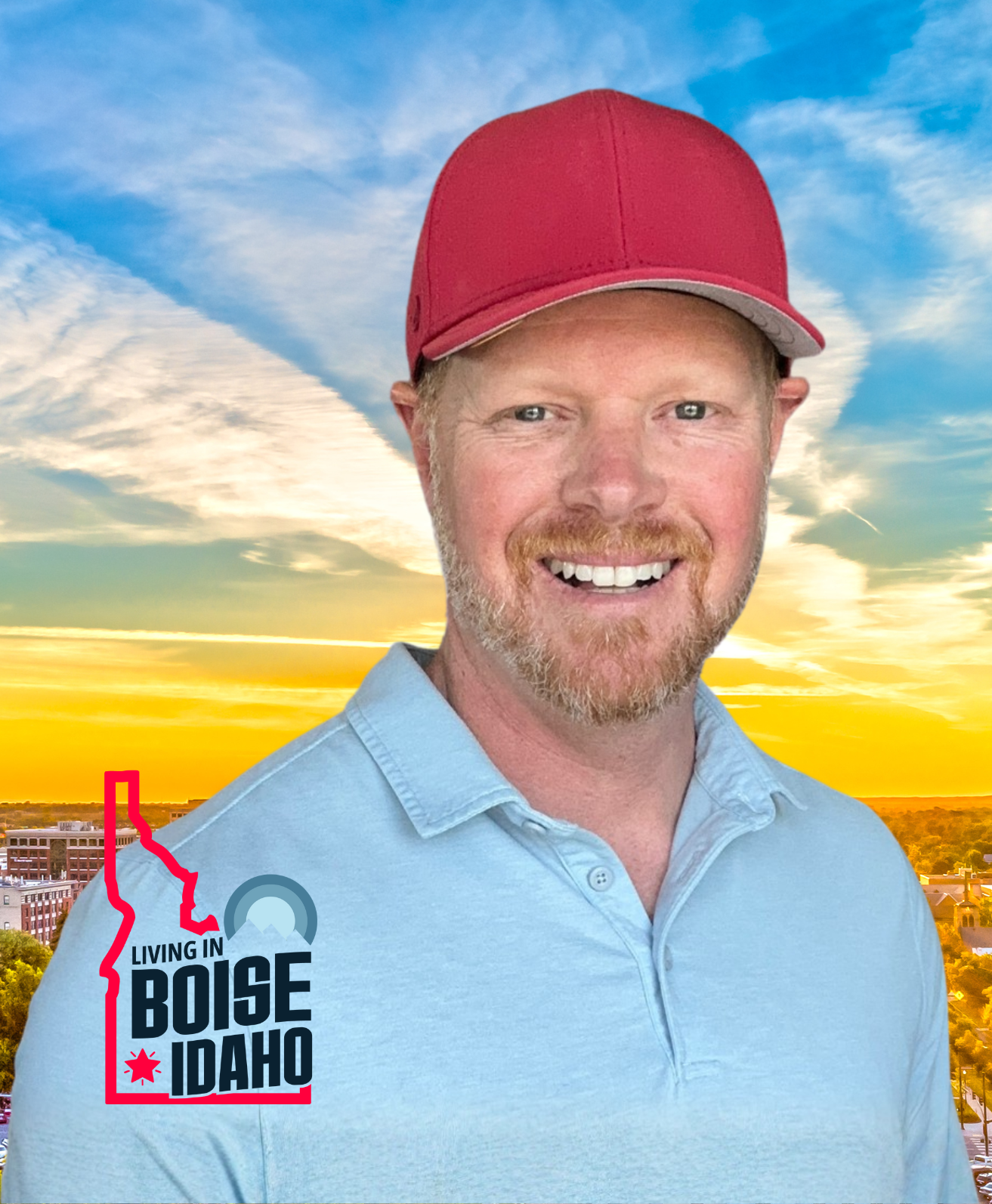
Curtis Chism
Licensed Idaho Real Estate Agent • eXp Realty • License #SP56593
Third-generation San Diegan, four years in Idaho, three homes owned. I've made the mistakes and built the playbook. Learn more about how I work with relocating buyers at weknowtreasurevalley.com/about.
Ready for the Real Version of This Move?
I've been exactly where you are. Let's map out your specific situation — timeline, budget, the right part of the valley for how you actually live — before you make the decisions that are hardest to undo.
Get the Relocation Guide Call or Text: 208-510-0427