If you're seriously thinking about moving to Boise Idaho in 2026, you've probably already read a dozen versions of this topic — half of them breathless enthusiasm, half of them Reddit complaints. Neither is the honest version. I moved here from San Diego four years ago, own three properties here, and help California, Oregon, and Washington families relocate to the Treasure Valley every week. This is the list I actually give people when they ask me to be straight with them.
Five real pros. Five real cons. No chamber of commerce spin and no doom-scrolling. Just the things that matter most for the decision you're actually trying to make.
- Pro #1: Your Money Goes Dramatically Further
- Pro #2: Outdoor Access That Actually Changes Your Life
- Pro #3: Safety That Goes Beyond the Statistics
- Pro #4: Freedom From the Regulatory Grind
- Pro #5: Community That's Genuinely Possible to Build
- Con #1: The Winter Inversion Will Test You
- Con #2: Growth Has a Real Cost
- Con #3: The Job Market Is Thinner Than California's
- Con #4: The Food and Culture Gap Is Real
- Con #5: You're Far From Where You Came From
- So — Is the Move Worth It?
- Frequently Asked Questions
Pro #1: Your Money Goes Dramatically Further
This is why most people start looking at Boise, and the financial case is still genuinely strong in 2026 — just not as dramatic in the headline housing comparison as it was a few years ago. Ada County's median sold price was approximately $540,000 to $575,000 as of mid-2026, which puts it significantly below California's major metros but not in a different universe from them the way it was in 2019 or 2020. The better comparison isn't purchase price — it's what you get for that price and what the total financial package looks like.
What $540,000 buys in Meridian: a 2,400 to 2,800 square foot new construction home, three-car garage, modern systems, builder warranty, and a real yard. What $540,000 buys in most California suburbs: an older, smaller home with a fraction of the space and a much higher maintenance burden. The square footage difference is routinely 40 to 60%. Then layer in the structural financial advantages that repeat every year you live here — Idaho's flat 5.3% income tax versus California's 8 to 13.3% progressive rate; $75 vehicle registration versus $300 to $800+ in California; property tax effective rates of 0.4 to 0.8% with a $125,000 homeowner's exemption versus California's 1%+ base; and homeowners insurance that — while rising — is still a fraction of California's crisis market. The first time I paid $75 to register my truck in Idaho after paying over $800 the year before in California, I sat in the parking lot and looked at the receipt for a while. That was the moment it got real.
Pro #2: Outdoor Access That Actually Changes Your Life
If you're moving partly because you want to be closer to outdoor life — and for many California transplants this is as important as the financial picture — Boise delivers in a way that most people don't fully anticipate until they're living it. Over 180 miles of hiking, mountain biking, and trail running routes begin at the literal edge of the city's North End neighborhoods — no permit, no reservation, no hour-long drive to the trailhead. The Boise River Greenbelt runs 25 miles through the valley and is accessible in minutes from most suburban neighborhoods. Bogus Basin ski resort is 45 minutes from downtown. Kirkham Hot Springs, the Payette River, the Sawtooth Mountains, and McCall are all within a day's reach.
The difference isn't the quality of the destination — California has extraordinary landscape. The difference is the friction of getting to it. In California, outdoor access is something you plan for; a trip you organize around traffic, parking, reservations, and a significant time commitment. In Boise, outdoor access becomes something you do on a Tuesday evening when nothing else is scheduled. People who went outdoors two or three times a month in California find themselves going two or three times a week in Idaho. That shift from event to habit is a genuine quality-of-life change that's almost impossible to fully describe before you've experienced it. I grew up in San Diego thinking I understood outdoor access. I had no idea.
Pro #3: Safety That Goes Beyond the Statistics
Idaho has the lowest total crime rate of any state in the country — 11.68 incidents per 1,000 residents. The suburban communities around Boise — Meridian, Eagle, Star, Kuna — are among the lowest in the nation on violent crime. Those statistics are real and meaningful. But they don't fully capture what safety actually feels like as a daily experience.
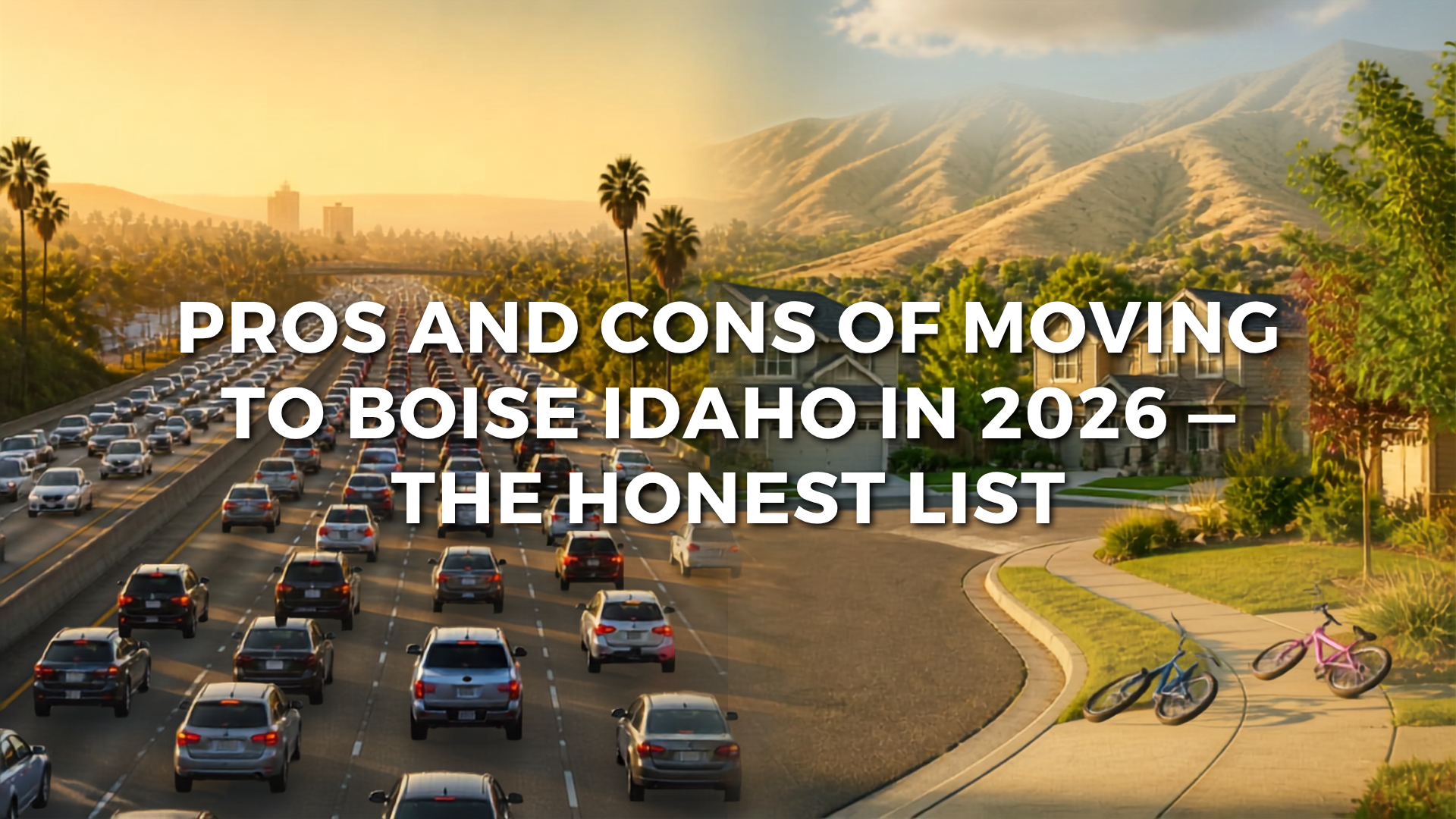
The things that got normalized in California — car break-ins, catalytic converter theft, the low-grade urban anxiety of always being alert, the mental overhead of urban property crime — are not the daily reality here. You can leave things visible in your car. You can let your kids play outside without watching from the window. The cul-de-sac my family moved to in Star — kids out riding bikes, neighbors who know each other's names, nobody worrying about what's coming around the corner — that's not performance. That's the actual texture of daily life here. The mental bandwidth that gets returned to you when you stop carrying that low-level defensive awareness is more significant than most people expect, and it shows up most clearly in retrospect — in the absence of something you didn't know you'd been carrying.
Pro #4: Freedom From the Regulatory Grind
This one takes longer to appreciate than the financial savings or the outdoor access, but by year two it's one of the things people mention most consistently. California's regulatory environment has accumulated decades of rules, requirements, mandates, and restrictions that touch daily life in a hundred small ways — vehicle inspections, smog checks, specific product bans, complex homeschool requirements, a progressive tax structure that penalizes income growth, and a general government orientation toward managing individual behavior rather than enabling it.
Idaho's orientation is different at a foundational level. Constitutional carry. No vehicle inspections or smog checks. A flat income tax that just went down, not up. School choice that is genuinely real — a $5,000 per child parental tax credit for qualifying private and homeschool programs, and a homeschool framework that requires only notifying your district with no curriculum review or testing requirements. The 4th of July in Star sounds like a war zone because the entire neighborhood is lighting fireworks and everyone loves it. The things that drove you out of California — the sense that the state was continuously inventing new ways to insert itself between you and how you want to live — are largely absent here. The mental bandwidth you get back is real, and it compounds over time.
Pro #5: Community That's Genuinely Possible to Build
The loneliness that many California transplants describe from their last years in the Golden State — neighbors who don't interact, apartments without common spaces, a pace of life that doesn't leave room for relationship — that doesn't have to be the story here. Idaho's community culture is genuine, not performed. The people who move here are overwhelmingly trying to find something real, and the conditions for it exist in a way that many California suburbs don't support structurally.
Community doesn't happen automatically here — it doesn't anywhere. You have to show up. Idaho isn't going to chase you down and hand you a social network. But the infrastructure for community is often physically present in a way California's suburban density doesn't allow: the neighborhood pool that becomes the place where families meet every summer evening, the cul-de-sac where kids actually play outside, the church and the homeschool co-op and the local event that puts you in the same room as people who share your values. When I moved from our first Nampa neighborhood to a new community in Star, the difference was the pool. Within three months we'd met more like-minded families than in years at the previous address. The pool doesn't make friends for you. It creates conditions where friendships can actually form — and that structural difference matters more than most buyers think when they're comparing listings.
Con #1: The Winter Inversion Will Test You
This is the one I put first in the cons list because it's the most underestimated and the most consistently surprising to California transplants. It's not the cold. You can dress for cold. It's the inversion — the specific weather pattern where cold air gets trapped in the Treasure Valley basin beneath a warmer air layer above, producing flat, motionless, lightless gray sky for days and sometimes two to three weeks at a stretch in December and January.
Portland transplants have some frame of reference for extended gray. Southern California transplants have essentially none. A San Diego winter is the antidote to gray — that's the whole point of living there. Coming from San Diego, my first Idaho winter was genuinely one of the hardest experiences of the transition. The cold I handled fine. The inversion — specifically day ten of flat gray nothing with no movement in the air — had me quietly reconsidering the decision in a way that landing in a July heat wave never did. By year four I have a full playbook: I plan a trip somewhere warm in January as maintenance, not vacation. The inversion always breaks, and the first clear day after it is one of the most beautiful things I've seen. But if you need sun to function, this needs to be on your list of specific things to plan for before you arrive — not a footnote you discover in February.
Con #2: Growth Has a Real Cost
The Treasure Valley added roughly 190,000 residents between April 2020 and July 2025 — one of the fastest growth rates in the country. That growth is what drives the appreciation story that makes buying here a strong long-term financial decision. It's also what drives the things that make both longtime residents and recent transplants occasionally frustrated with where the valley is headed.
Traffic on I-84, especially the Eagle Road interchange, is genuinely congested during peak hours. Highway 44 through Star was designed for a much smaller city and shows it every morning. West Ada's Star Elementary is at 137% of design capacity — overcrowding that creates real classroom experience differences. Infrastructure consistently runs behind the pace of residential approvals. Ada County's median home price reached approximately $540,945 in March 2026, up from roughly $133,000 at the 2011 trough — a 300% rise in fifteen years that has made the valley genuinely unaffordable for some longtime Idaho families. The cultural tension that comes with that kind of change is real, and newcomers who arrive without humility about what their presence means in someone else's hometown will encounter it.
Con #3: The Job Market Is Thinner Than California's
For remote workers — and a significant portion of the people seriously considering this move are working remotely — this con is largely irrelevant. If you're earning California or national rates while living at Idaho prices with Idaho taxes, you're in one of the best financial positions available to anyone in America right now. That arbitrage is real and it compounds meaningfully over time.
But if you need to find local employment in a specialized field — technology at the depth of San Francisco's ecosystem, entertainment and media, specialized law, finance at the sophistication level of a major California market — Boise is thinner. The local economy is strong and diversifying rapidly: Idaho's unemployment rate was 3.7% in June 2026, Micron's $60+ billion semiconductor expansion is creating significant high-wage employment, and healthcare and construction are extremely active. But if your career requires the deep specialization of a major California metro's job ecosystem, investigate your specific industry's local picture carefully before you commit. The people who've been most disappointed by this move are the ones who arrived expecting California-equivalent local employment depth and found something meaningfully different. See the readiness post for the job market question in the broader buying-readiness framework.
Con #4: The Food and Culture Gap Is Real
I'm going to be honest about this one the way most relocation content isn't, because treating it as a minor footnote does people a disservice. If you're moving from Los Angeles, San Francisco, or San Diego — cities with world-class depth in authentic ethnic cuisine, serious dining culture, diverse arts and music scenes, internationally recognized cultural institutions — the adjustment to Boise's food and arts landscape is real and it takes time.
Boise's restaurant scene is genuinely good and improving every year. Eagle's corridor — Crave, Lalo, Old State Saloon, Vessel Kitchen, Gem State Brewing — has real quality. The Basque cultural community adds something you won't find most other places in America. Treefort Music Fest is nationally respected. The Idaho Shakespeare Festival is excellent. Local breweries punch above their weight. There's plenty to appreciate. But the depth and diversity — the authentic regional Mexican food at every price point, the world-class sushi, the Korean BBQ, the Vietnamese, the Eritrean — that international culinary diversity comes from genuinely diverse immigrant communities that Boise doesn't have at California's scale. You're not going to find its equivalent here in the near future, and the people who do best with this adjustment are the ones who named the trade honestly before they made it rather than telling themselves it wouldn't matter and discovering that it does.
Con #5: You're Far From Where You Came From
Boise to Los Angeles is about 900 miles. Boise to the Bay Area is about 700 miles. Boise to San Diego is about 1,000 miles. That distance is real and ongoing, and it affects your life in ways that are easier to underestimate before the move than after. It's not the big moments — you'll fly home for the big moments. It's the small ones. Your mom has a minor health thing and you'd normally just drive over. Your best friend is going through something and you'd normally just be there. Your nephew had a great game and you could have been there but you're 900 miles away.
This doesn't mean the move is wrong. For most families who've made it successfully, the overall trade is clearly worth it, and relationships maintained intentionally across distance can be genuinely deep and real. But the families who navigate this best are the ones who planned for it explicitly before they moved — budgeted for flights, scheduled visits as seriously as any other priority, and built maintaining their California relationships into their life here rather than assuming it would work itself out. The families who struggle most are the ones who underestimated the emotional weight of it and didn't have a plan. Go in with eyes open and a specific strategy, not a vague assumption that modern connectivity will make distance feel smaller than it is.
| The 5 Pros | The 5 Cons |
|---|---|
| Money goes dramatically further — income tax, registration, property tax, insurance | Winter inversion — weeks of flat gray sky in December–January |
| Outdoor access becomes daily habit, not weekend event | Growth has a real cost — traffic, school overcrowding, cultural friction |
| Safety — nation's lowest crime rate; physical daily-life shift is real | Job market thinner than California in specialized fields |
| Freedom from regulatory grind — constitutional carry, school choice, no smog checks | Food and culture gap is genuine — takes time to adjust to |
| Community genuinely possible to build in the right neighborhood | 700–1,000 miles from California family — requires a real plan |
So — Is the Move Worth It?
For most West Coast buyers seriously considering this move in 2026, yes. The financial advantage is real and structural. The outdoor access genuinely changes how you live. The safety change is physical as much as statistical. The freedom from California's regulatory and political environment is exactly what most of the people who make this move were specifically looking for.
The people who struggle here are almost always the ones who came with a specific blind spot: they didn't plan for the winter, they expected community to form without their engagement, they needed local job depth that wasn't there and hadn't verified it, or they underestimated how much they'd miss the food and the family proximity. Every one of those is a solvable problem with honest preparation. None of them is a reason not to go — but all of them are reasons to go in with eyes open rather than discovering them after you've signed the closing documents.
The relocation guide is the right starting point if you haven't read it yet. Then let's talk specifically about your situation before any of this becomes a decision.
Frequently Asked Questions
What are the biggest pros of moving to Boise Idaho in 2026?
The five most consistent advantages: significantly lower cost of living than California with a flat 5.3% income tax, $75 vehicle registration, lower property taxes, and lower homeowners insurance; outdoor access that shifts from planned weekend trips to a daily habit — 180+ miles of foothills trails starting at the city's edge with no permit required; Idaho's lowest-in-the-nation crime rate with a real physical safety shift that California transplants consistently describe; freedom from California's regulatory and political environment, including constitutional carry and meaningful school choice; and the genuine possibility of building close community in a culture that values it and in neighborhoods with the physical infrastructure to support it.
What are the biggest cons of moving to Boise Idaho?
The five most consistently cited drawbacks: the winter temperature inversion — flat, motionless gray sky that can sit in the valley for days or weeks in December and January, harder than most California transplants expect; growth pains including traffic congestion on key corridors like Highway 44 and I-84's Eagle Road interchange, school overcrowding in fast-growing areas, and the cultural friction of being a newcomer in a place changed significantly by in-migration; a local job market thinner than California's in specialized fields; a real food and cultural gap from California's major metro dining and arts depth; and the 700 to 1,000 mile distance from California family that requires intentional maintenance.
Is Boise Idaho worth moving to from California?
For most California families with stable income and a five-plus year time horizon, yes. The buyers who've been most satisfied came in with honest expectations about the winter, built community actively rather than waiting for it, investigated the local job market for their specific field before committing, and planned explicitly for maintaining California family relationships across distance. The ones who struggled came in with at least one significant blind spot. Go in with eyes open on all five cons and this move has a very high success rate.
Is Boise Idaho affordable in 2026?
Relative to California's major metros, yes — significantly. Ada County's median sold price of approximately $540,000 to $575,000 buys dramatically more home here than the same money does in California: typically 40 to 60% more square footage in new construction with modern systems and a builder warranty. The financial advantage extends through lower income taxes, vehicle registration, property taxes, and homeowners insurance. For first-time buyers without California equity, Canyon County's $440,000 median in Nampa and Caldwell offers the most accessible entry. Boise is no longer the bargain it was in 2019, but the total financial package relative to California is still meaningfully better for most households.
What do people regret most about moving to Boise Idaho?
The most common sources of regret are almost always traceable to one of four things: underestimating the winter inversion and arriving without a plan for it; buying in the wrong part of the valley for how they actually live day-to-day; expecting the community to form automatically without putting in the work of building it; and underestimating how much they'd miss the food scene or the proximity to California family. Every one of these is a solvable problem with specific preparation before the move. None of them are inherent to the place — they're specific to arriving without a plan for them.
What should I know before moving to Boise Idaho from California?
The five things most consistently underprepared for: the winter inversion specifically — not just cold, but weeks of flat gray sky — and the need for a January management strategy before your first winter; total car dependency with no meaningful public transit (two cars required); Idaho's 6% grocery tax (a surprise for California transplants where groceries aren't taxed); pressurized irrigation versus domestic water for lawn care — ask before you offer on any home; and the importance of choosing the right neighborhood within the valley rather than just a city name, because the distance from your daily life determines whether you integrate things into your weekly routine or only get there for special occasions.
Key Takeaways
- Pro: Money goes further — 5.3% flat income tax, $75 registration, lower property tax and insurance. Remote worker arbitrage is one of the best financial plays in America right now.
- Pro: Outdoor access becomes daily habit — 180+ miles of foothills trails at the city's edge, no permit or reservation, accessible Tuesday evening not just on planned weekends.
- Pro: Safety is physical, not just statistical — Idaho's lowest crime rate in the nation produces a real shift in daily life experience California transplants notice immediately.
- Pro: Freedom from regulatory grind — constitutional carry, school choice including a $5,000/child parental tax credit, no smog checks, a flat income tax that went down not up.
- Pro: Community is genuinely possible — but only in the right neighborhood and only if you show up for it.
- Con: Winter inversion — not just cold, flat gray sky for days or weeks in December–January. Plan a January trip before your first winter.
- Con: Growth has real costs — Eagle Road and I-84 congestion, Star Elementary at 137% capacity, Ada County prices up 300% since 2011, cultural friction that requires humility.
- Con: Job market thinner in specialized fields — excellent for remote workers, a real constraint if you need local specialized employment.
- Con: Food and culture gap is genuine — Boise's scene is good and improving, California's depth doesn't exist here and won't for years.
- Con: Distance from California family requires a real plan — 700 to 1,000 miles is an ongoing choice, not a footnote.
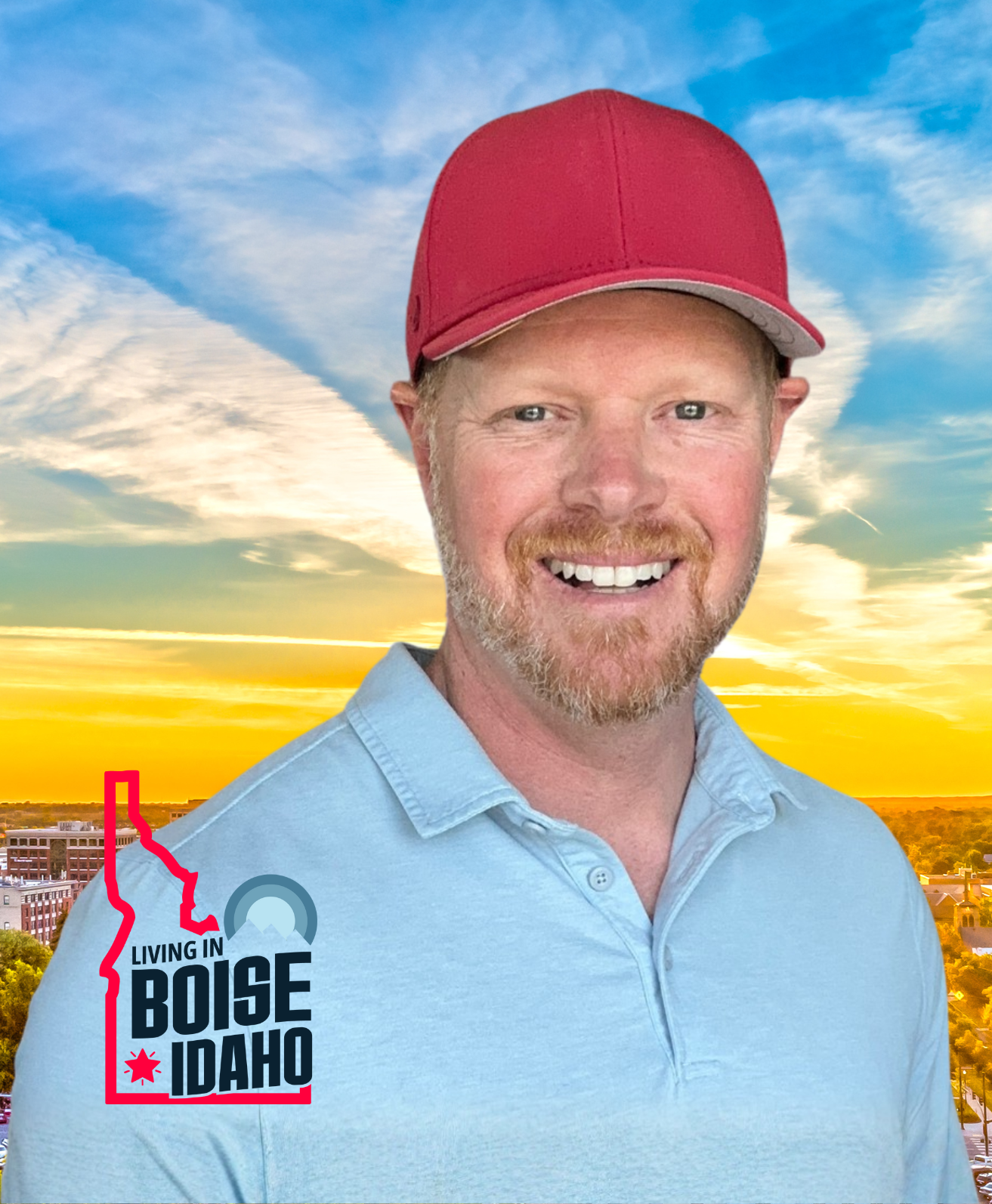
Curtis Chism
Licensed Idaho Real Estate Agent • eXp Realty • License #SP56593
I made this move from San Diego, built a life here across three properties, and help families navigate this decision every week. The honest version starts with a real conversation. Learn more at weknowtreasurevalley.com/about.
Ready for the Real Conversation?
Whether you're 9 days, 90 days, or two years out from making this move, let's talk through your specific situation before you commit to anything.
Get the Relocation Guide Call or Text: 208-510-0427